The Walk-Away Artists: When Quitting One Sport Was the Secret to Becoming a Legend

America loves a fighter. The athlete who bleeds through the fourth quarter, who tapes up the ankle and gets back out there, who refuses to let the scoreboard have the final word. That story sells jerseys. It fills arenas. It ends up bronzed outside stadiums.
But there's another story. One that doesn't fit on a motivational poster. It's the story of the athlete who looked at everything they'd built — the contracts, the trophies, the identity — and walked away from it anyway. Not because they gave up. Because they were paying attention.
The Man Who Was Two Things at Once
Bo Jackson didn't choose between baseball and football. He refused to. When the Kansas City Royals drafted him in 1986, most people assumed he'd eventually have to pick a lane. Professional sports didn't work that way. You committed. You specialized. You gave everything to one thing.
 Photo: Bo Jackson, via scg-static.starcitygames.com
Bo gave everything to two.
He became the first athlete in modern history to be named an All-Star in both the NFL and Major League Baseball — a fact so improbable that Nike built an entire advertising mythology around it. The "Bo Knows" campaign didn't just sell shoes. It sold the radical idea that the conventional wisdom about athletic identity was wrong.
Then a hip injury in 1991 ended his football career. Most people expected that to be the end of the story. Instead, Jackson underwent hip replacement surgery and returned to baseball. He hit a home run in his first at-bat back. The walk-away, the forced departure, the detour — none of it was the end. It was just the shape his path happened to take.
The Outcast Who Invented Himself Twice
Deion Sanders was not supposed to leave baseball. He was talented, visible, and under contract. But Sanders had always operated on a different frequency than the sports establishment expected. In 1989, he played in an MLB game in the afternoon and an NFL game that same evening — a scheduling feat that felt less like athleticism and more like performance art.
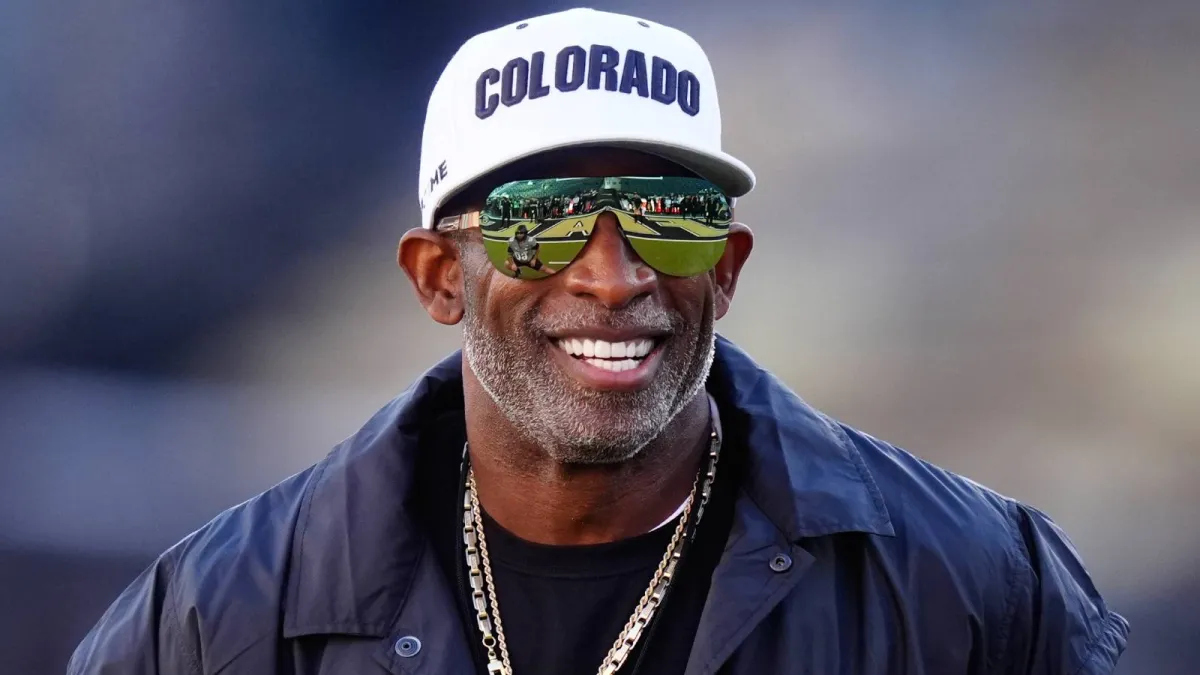 Photo: Deion Sanders, via brobible.com
When Sanders eventually stepped back from baseball to focus on football full-time, critics called it a waste of potential. What they missed was that Sanders understood something about his own gifts that the scouts and the analysts didn't: his greatness wasn't tied to a single sport. It was tied to the way he moved through competition itself.
He became one of the most decorated defensive backs in NFL history. He won two Super Bowl rings with two different teams. He was inducted into the Pro Football Hall of Fame. And decades later, when he took over as head coach at Jackson State — and then Colorado — he brought that same refusal to be categorized into the coaching box. Prime Time never stopped being Prime Time. He just kept finding new arenas for the performance.
The Native Son They Kept Trying to Diminish
Jim Thorpe's story is older and harder and more American in the worst possible sense. He won two gold medals at the 1912 Stockholm Olympics — one in the pentathlon, one in the decathlon — and King Gustav V of Sweden reportedly told him, "Sir, you are the greatest athlete in the world." Thorpe allegedly replied, "Thanks, King."
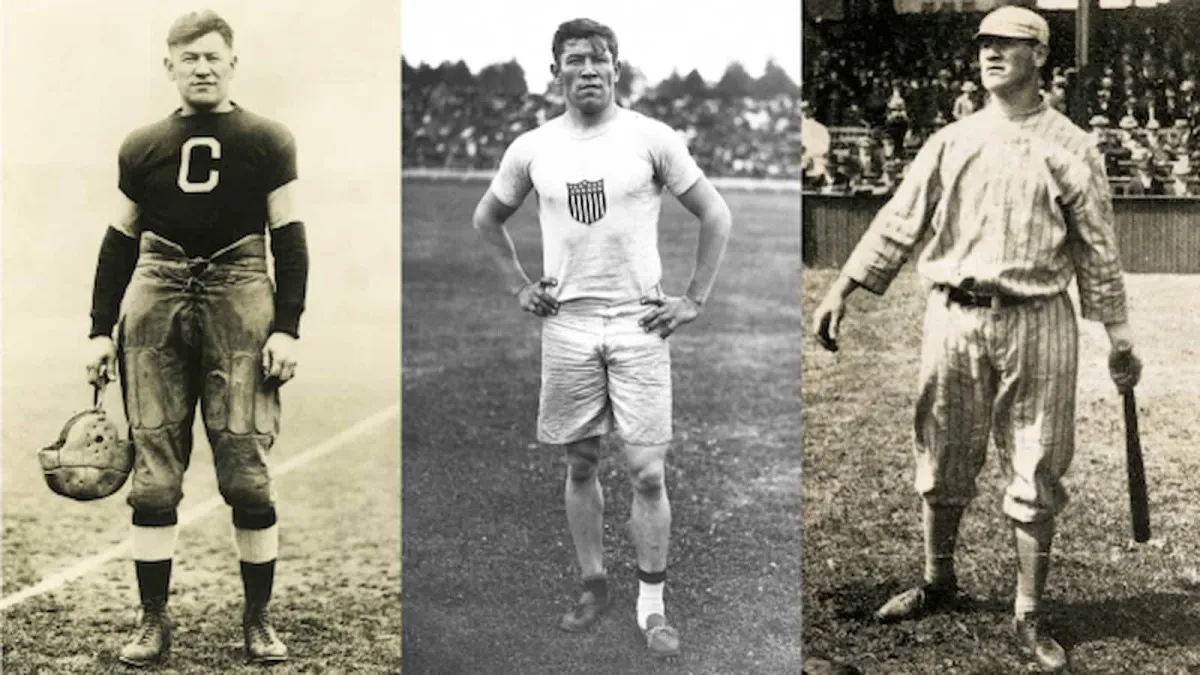 Photo: Jim Thorpe, via newsd.in
Then the medals were taken away. The Amateur Athletic Union stripped him of his amateur status after it emerged he'd been paid a small sum to play minor league baseball years earlier. The punishment was retroactive, disproportionate, and widely understood to carry a racial dimension. Thorpe was Sac and Fox, and the American sports establishment of the early twentieth century was not built to celebrate that.
But Thorpe didn't disappear. He went on to play professional football at a time when the sport was barely organized, becoming one of the founding figures of what would eventually become the NFL. He played professional baseball. He barnstormed, he competed, he refused to stop moving.
The medals weren't restored until 1983, thirty years after his death. The walk-away wasn't his choice. But what he built in the aftermath — across multiple sports, across decades, against institutional resistance — was entirely his own.
Why the Wrong Path Keeps Producing the Right Results
There's a pattern worth naming here. It isn't about athletic talent, though all of these men had it in abundance. It's about the relationship between identity and sport.
The athletes who change history aren't always the ones who found their sport early and never looked back. Sometimes they're the ones who held their sport loosely enough to leave it — or who got pushed out — and discovered in the leaving that their real gift was something larger than any single game.
Coach Nick Saban left the NFL's Cleveland Browns after a single difficult season to return to college football. He went on to build the most dominant dynasty in modern college football history at Alabama. His departure from the professional game wasn't a retreat. It was a recalibration.
Michael Jordan left basketball at the height of his powers to pursue a baseball career that most people found baffling. He came back to the Bulls and won three more championships. Whether the detour helped, hurt, or simply didn't matter to the final outcome is still debated. What's clear is that Jordan's willingness to walk away — and then walk back — made him more mythological, not less.
The Lesson the Locker Room Never Teaches
Sports culture is built on persistence. On the grind. On the idea that the door you keep knocking on will eventually open. And sometimes that's true.
But the athletes in this story found their doors by walking away from the ones everyone told them to keep pounding. They found them by getting cut, or stripped of their titles, or simply deciding that the field they were on wasn't the right one.
Quitting, in these cases, wasn't the opposite of greatness. It was the condition for it.
America has always been more comfortable celebrating the comeback than the departure. But the departure is where the story actually starts. The walk-away is where these athletes stopped being what the sports world expected them to be — and started becoming something that nobody had a category for yet.
That's not failure. That's the wrong path doing exactly what it's supposed to do.