Ashes First, Glory Later: The Chef Who Lost Everything and Cooked Her Way Back
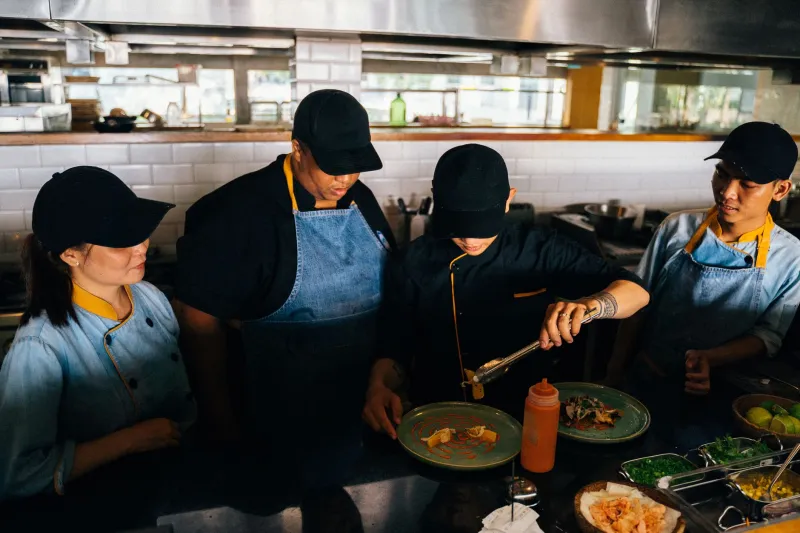
The fire started in the kitchen. It usually does.
For a chef, that sentence carries a particular kind of dread. The kitchen is the one place you're supposed to have complete control — the temperatures, the timing, the sequence of a hundred small decisions that add up to something beautiful on a plate. When that same space turns against you, it doesn't just take the building. It takes the thing you believed about yourself.
For the purposes of this story, we'll call her Marie. Not because her real name doesn't matter — it absolutely does — but because her story is, in its bones, the story of a type: the woman in a male-dominated industry who climbs the right way, earns her place, and then watches it all disappear through no fault of ambition.
The First Restaurant and the Night It Ended
Marie had done everything correctly. She'd trained under serious people, worked brutal hours in serious kitchens, and saved for years before opening her own place in a mid-sized American city that had a growing food scene and, she thought, an appetite for something a little more adventurous than what was already on offer.
The restaurant was small — forty seats, an open kitchen, a menu that changed weekly and leaned hard into regional ingredients prepared with techniques she'd spent a decade learning. The reviews were cautious but warm. The regulars were loyal. She was, by most measures, on her way.
Then came the fire. An equipment failure during a late service, a kitchen crew that did everything right in response, and still — not enough. The dining room was gutted. The equipment was destroyed. The building's owner, unwilling to rebuild on the timeline Marie needed, moved on. The insurance settlement covered some of it. Not enough.
What followed was worse than the fire itself. In a food community that runs on reputation and relationships, a catastrophic failure — even one that wasn't your fault — has a way of making people suddenly unavailable. Investors who had expressed interest went quiet. A partnership she'd been negotiating collapsed within weeks. The city, it turned out, had a short memory for promise and a long one for disaster.
The Smaller City That Said Yes
Marie spent almost a year doing consulting work and pop-up dinners, rebuilding her savings and, more importantly, rebuilding her nerve. The offer that eventually changed everything came from a place she would never have chosen: a smaller city in a different region, one without a particularly distinguished food culture, where a local hospitality group was trying to elevate their restaurant portfolio and needed someone with genuine credentials.
It was not glamorous. The market was unfamiliar. The customer base was conservative in ways that made her nervous. Her peers, the ones still working in the city that had written her off, were politely baffled by the move. One well-meaning colleague told her it felt like "going backward."
It wasn't going backward. It was going sideways into something she couldn't have predicted.
What Freedom Tastes Like
Without the pressure of performing for a food media establishment she'd already been burned by, Marie started cooking differently. The smaller market meant she couldn't rely on the same suppliers she'd built relationships with before, which forced her to find new ones — and in doing so, she stumbled onto a regional food tradition she'd never seriously engaged with. Local farmers, regional preservation techniques, flavor combinations that felt genuinely specific to where she was.
The menu that emerged was unlike anything she'd done before. It was more personal, stranger in the best way, rooted in a place rather than in the idea of a place. The dining room was smaller than her first restaurant. The price point was lower. But the cooking was more confident, more fully hers, than anything she'd produced when she was trying to be the kind of chef other people expected her to become.
Word traveled slowly, then all at once. A food writer passing through wrote a piece that got picked up nationally. A James Beard nomination followed — the kind that makes the phone start ringing again from people who had previously stopped answering yours.
The Thing About Starting Over Somewhere Strange
Marie has talked in interviews about what the fire and the blacklisting actually did to her, beyond the obvious damage. The version she tells now is not a story of resilience in the motivational-poster sense. It's more complicated than that.
Losing her first restaurant stripped away the version of success she'd been chasing — the specific city, the specific audience, the specific validation she'd decided mattered. What the smaller city gave her, she says, was the chance to figure out what she actually wanted to cook when nobody whose opinion she'd previously cared about was watching.
That's not a lesson you can manufacture. You can't decide to have that kind of freedom. It usually has to be forced on you.
The kitchen that burned down was the kitchen she'd built for someone else's approval. The one she built after — in a city nobody expected, for an audience she hadn't planned on, with ingredients she'd never worked with before — that one was entirely hers.
The wrong city. The wrong market. The wrong timeline. Somehow, exactly right.
The greatest meals, it turns out, sometimes come from the recipes you were never supposed to be cooking in the first place.