The Man With No Degree Who Gave America a Reason to Look at Itself
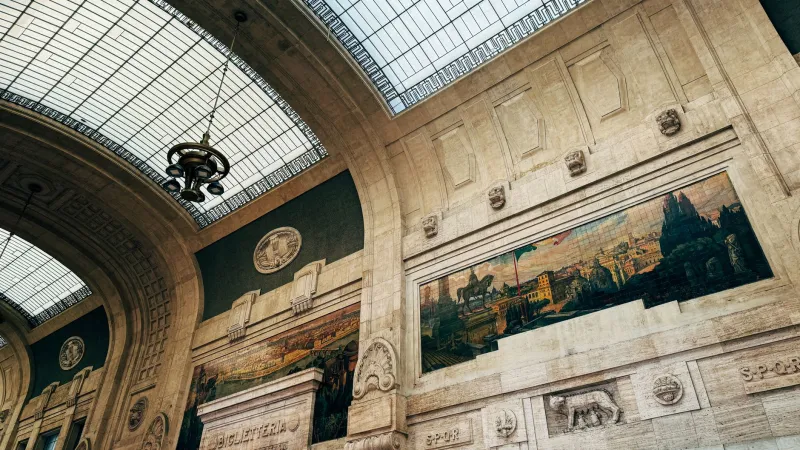
In the winter of 1935, a self-taught drifter from Iceland who had grown up in the American Midwest walked into a government office in Washington, D.C., and pitched a plan so audacious it should have been laughed out of the room. He wanted to put American artists to work — tens of thousands of them — documenting, painting, sculpting, and decorating the country from the inside out. He wanted to take art off the walls of Manhattan galleries and put it in the places where real Americans actually lived.
His name was Edgar Holger Cahill. He had no degree. He had no institutional credentials. He had never run anything larger than a small exhibition space. What he had was a radical idea about who art was actually for — and a government desperate enough to listen.
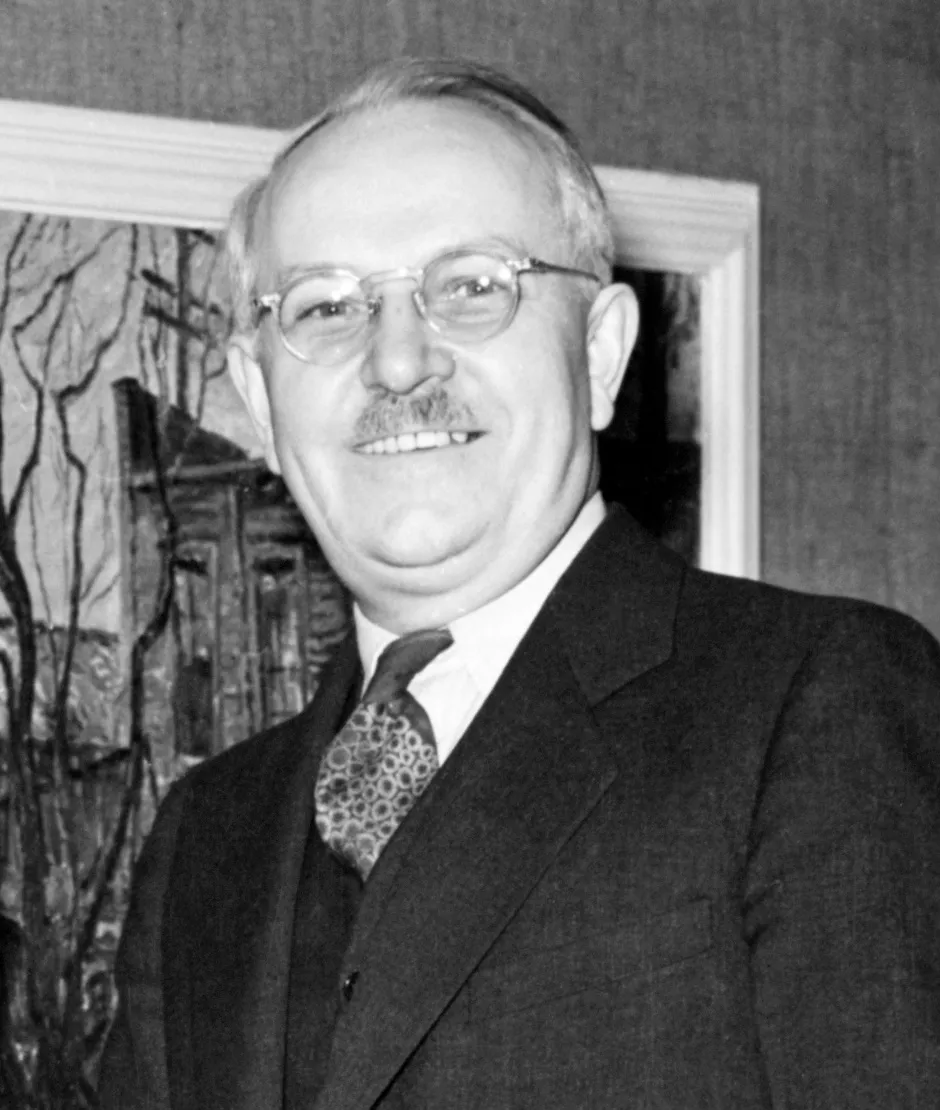 Photo: Edgar Holger Cahill, via i0.wp.com
The Education He Wasn't Supposed to Have
Cahill was born Sveinn Kristján Björnsson in 1887 in Iceland, immigrated to North America as a child, and spent his early years moving between Manitoba and the American Midwest with a stepfather who had little patience for formal schooling. He educated himself in public libraries, in the company of writers and artists he sought out in New York's Greenwich Village, and through the kind of voracious, undisciplined reading that no curriculum would ever have organized for him.
He worked as a journalist, a laborer, a merchant sailor, and a publicist before landing, almost sideways, in the orbit of the Newark Museum in the early 1920s. There, working under the progressive curator John Cotton Dana, Cahill absorbed a philosophy that would define everything he did afterward: art belonged to people, not institutions. The museum's job was to bring the two together.
He was never quite comfortable in institutional settings. He was too restless, too opinionated, too convinced that the art world's obsession with European tradition was a form of cultural self-erasure for a country as vast and strange and original as America. He started writing about American folk art at a time when the serious critics barely acknowledged it existed. He organized exhibitions of quilts, weather vanes, ship figureheads, and painted furniture — objects that the art establishment considered craft at best, junk at best, and certainly not worthy of serious attention.
The establishment was not impressed. Cahill kept going anyway.
The Empty Warehouses and the Big Idea
By the time the Great Depression had hollowed out the American economy, the country had a particular kind of problem that nobody had quite anticipated: thousands of trained artists with no work, no income, and no way to contribute their skills to a society that had stopped buying art entirely.
The Federal Art Project, launched in 1935 as part of the Works Progress Administration, was designed to solve that problem. It needed a director. Cahill, who had spent years arguing that American art was being systematically undervalued and under-distributed, got the job.
What he built over the next eight years was, by almost any measure, the most ambitious public art program in American history.
Art in the Post Office, the School, the Hospital
The Federal Art Project employed more than 10,000 artists at its peak. It produced roughly 200,000 works — murals, paintings, prints, sculptures, photographs, posters. It established more than 100 community art centers in cities and rural areas across the country, many of them in places that had never had a gallery or a museum within driving distance.
Cahill was obsessive about the community centers. He understood, in a way that the more credentialed people around him often didn't, that the barrier between ordinary Americans and art wasn't taste or intelligence — it was access. People who had never been inside a museum weren't indifferent to art. They'd simply never been invited.
So he built the invitations. In Harlem, the Federal Art Project center became a gathering point for the artists who would define the Harlem Renaissance's second wave. In rural Alabama, traveling exhibitions brought paintings to communities that had no cultural infrastructure at all. In New Mexico, Native American and Hispanic artists found, for the first time, institutional support for work that the mainstream art world had long treated as ethnographic curiosity rather than legitimate creative expression.
The post offices got murals. The schools got prints. The hospitals got color on walls that had been bare for decades. None of it was accidental. Cahill had a theory — that art encountered in daily life, in the places where people actually spent their time, would do something that art encountered in hushed, formal galleries rarely managed: it would feel like it belonged to them.
The Index Nobody Knew They Needed
Among the Federal Art Project's less celebrated but arguably most lasting contributions was the Index of American Design — a massive, painstaking visual catalog of American decorative and folk art objects, produced by artists who traveled the country sketching and painting quilts, furniture, tools, toys, ceramics, and textiles.
The Index produced nearly 18,000 detailed illustrations. It was, in essence, a visual archaeology of American material culture — proof, rendered in exquisite watercolor, that the country had a rich, complex, deeply original artistic tradition that predated the European-influenced fine art establishment by generations.
Cahill had been making this argument in print for years. Nobody had fully listened. The Index made it impossible to ignore.
When the Gatekeepers Came for Him
The Federal Art Project was never without enemies. Conservative politicians viewed it with deep suspicion — some of the artists it employed held left-wing political views, and several of the murals produced under its auspices contained imagery that made certain members of Congress uncomfortable. The Dies Committee, precursor to the House Un-American Activities Committee, investigated the program for communist influence.
Cahill defended his artists with the stubbornness of someone who had spent his entire career being told that what he was doing didn't quite count. He argued that art was not propaganda, that the diversity of voices the project amplified was a sign of democratic health rather than subversion, and that a country serious about its own culture had an obligation to support the people who created it.
He lost, eventually. The Federal Art Project was defunded in 1943, a casualty of wartime budget pressures and political hostility. Cahill went back to writing and curating. The program he had built was quietly filed away in the category of New Deal experiments — interesting, somewhat controversial, probably too expensive.
What He Actually Left Behind
The full accounting of what Cahill accomplished is hard to compress into a resume, partly because so much of it was structural rather than spectacular. He didn't paint the murals himself. He didn't carve the sculptures or print the posters. What he did was build the conditions under which tens of thousands of American artists could work, and under which millions of Americans who had never considered art a part of their lives suddenly found it on the walls of their post office, their child's school, their neighborhood community center.
The artists he supported included Jackson Pollock, Lee Krasner, Mark Rothko, and Willem de Kooning — people who would go on to define the New York School and make American art, for the first time, the center of the global conversation rather than a provincial footnote to European tradition.
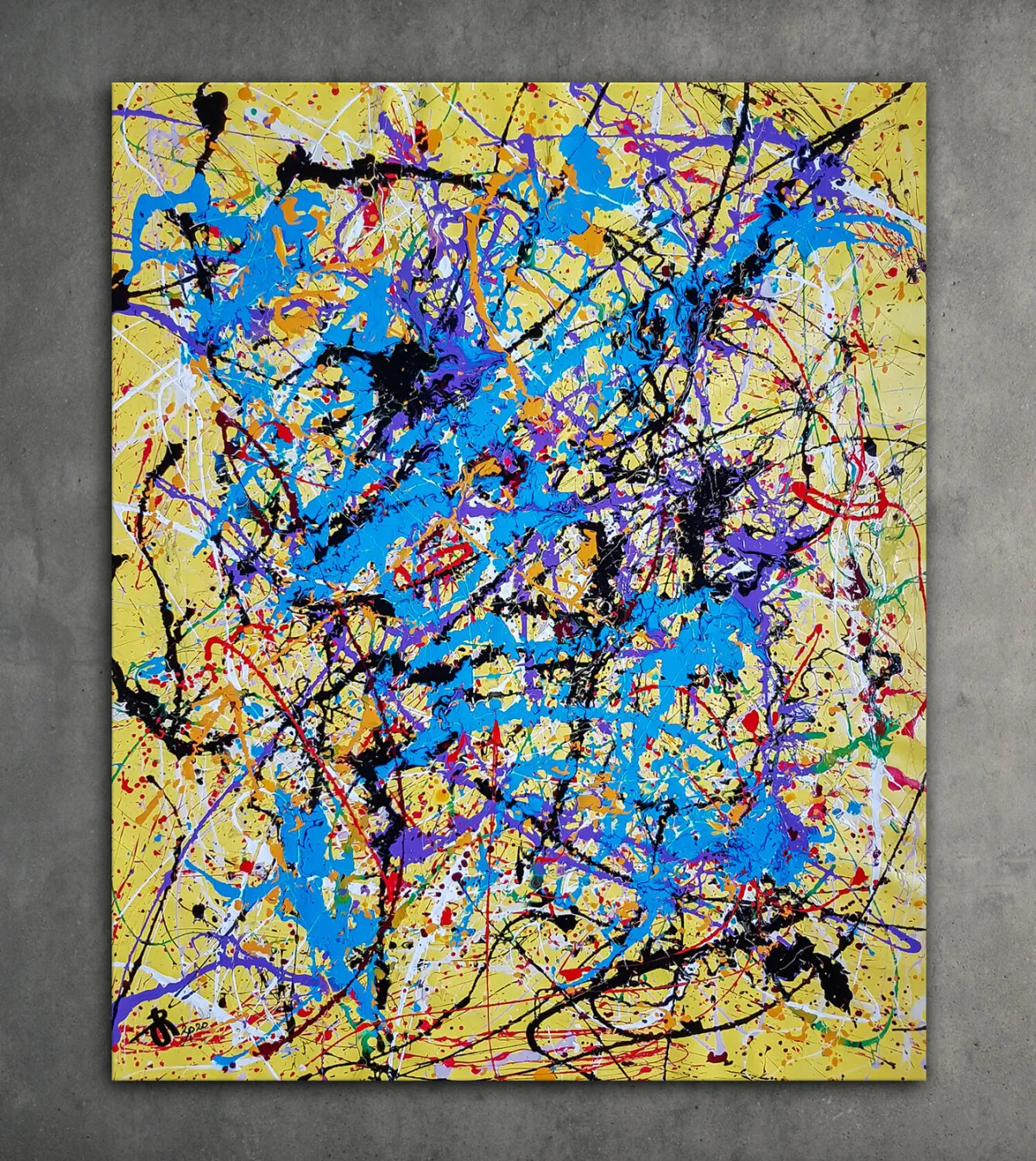 Photo: Jackson Pollock, via www.singulart.com
None of them would have cited Cahill as their primary influence. But all of them worked, during some of their most formative years, inside the infrastructure he built with no degree, no gallery pedigree, and no map.
The dropout from the Midwest who taught himself in public libraries didn't just give America's artists a paycheck during the worst decade of the twentieth century. He gave America a way of looking at itself — at its quilts and weather vanes and painted furniture, at its murals and community centers and folk traditions — and recognizing that the culture was already there, waiting to be seen.
Somebody just had to be unconventional enough to look.