She came to Johns Hopkins because it was the only place nearby that would treat her.
 Photo: Johns Hopkins, via crystalpng.com
In 1951, Baltimore's hospitals were segregated. For Black patients in the South and border states, Johns Hopkins was one of the few institutions that offered any care at all — and even then, the wards were divided, the resources unequal, and the dignity extended was partial at best. Henrietta Lacks arrived there in January of that year complaining of vaginal bleeding. She was thirty years old. She had five children. She had been working tobacco fields in Clover, Virginia since she was a girl.
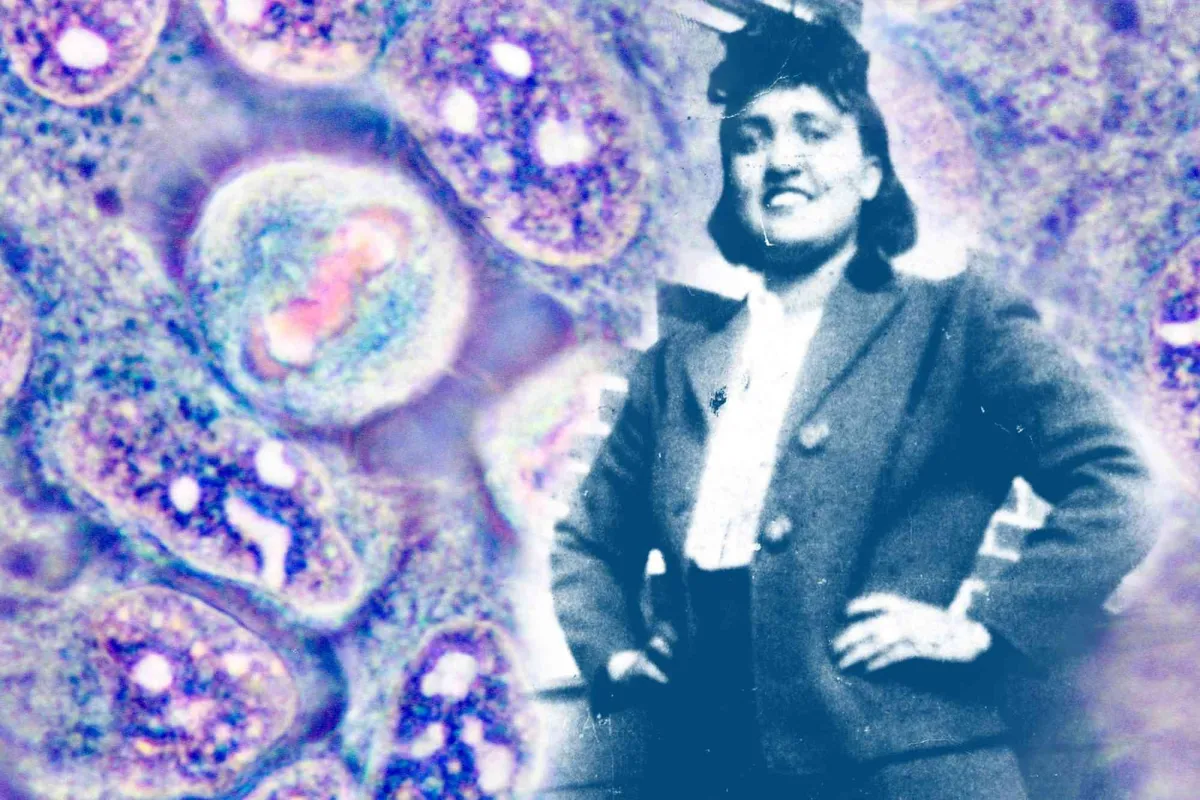 Photo: Henrietta Lacks, via images.squarespace-cdn.com
The doctors found a cervical tumor. They began treating her with radiation. And without asking her permission — without telling her anything at all — a physician named Howard Jones took a small sample of her tumor cells and sent them to a laboratory down the hall.
What happened next changed everything. For everyone except Henrietta.
The Woman Before the Science
It would be easy, and wrong, to begin this story with the cells. The cells are extraordinary. But Henrietta Lacks was extraordinary first, and in ways that had nothing to do with what her body would eventually produce for science.
She was born in Roanoke in 1920, the daughter of a family that scattered after her mother died in childbirth. She was raised by her grandfather in a log cabin that had once housed enslaved people on a Virginia tobacco plantation — a fact that carries its own terrible weight when you consider what would later be taken from her without consent. She was known for her warmth, her cooking, her red-painted toenails, her laugh. People who knew her described someone fully, vividly alive — not a symbol, not a specimen, but a person.
She married her cousin David Lacks at fourteen. They moved to Baltimore during World War II, chasing work in the steel mills. She raised her children in a neighborhood called Turner Station. She was, by every account, deeply loved by the people around her.
She was also dying, and she didn't know how fast.
The Cells That Wouldn't Quit
Scientists in the early 1950s had a problem. They desperately needed human cells they could grow in laboratory conditions — cells that could survive outside the body long enough to be tested, studied, and used in experiments. Every attempt had failed. Human cells, it turned out, were stubborn. They died.
Henrietta's didn't.
The sample taken from her tumor arrived in the lab of researcher George Gey, who had been trying for years to cultivate a stable human cell line. His team placed Henrietta's cells in a culture medium and waited. The cells not only survived — they thrived. They doubled every twenty-four hours. They were, in the language of oncology, immortal: capable of reproducing indefinitely under the right conditions.
Gey named them HeLa, using the first two letters of his patient's first and last name. He shared them freely with other researchers. Within months, they were being distributed across the country and eventually around the world.
Henrietta died in October 1951, eight months after her diagnosis. She was buried in an unmarked grave in Clover, Virginia.
What the Cells Built
The list of what HeLa cells made possible reads like a catalog of twentieth-century medical achievement.
In 1952, Jonas Salk used them to develop and test the polio vaccine — one of the most consequential public health victories in American history. In the following decades, HeLa cells were used to study cancer, genetics, the effects of radiation, the behavior of viruses, and the basic mechanics of how human cells divide and die. They went to space on early NASA missions to test the effects of zero gravity on human biology. They were central to the development of chemotherapy drugs, the HPV vaccine, and early AIDS research.
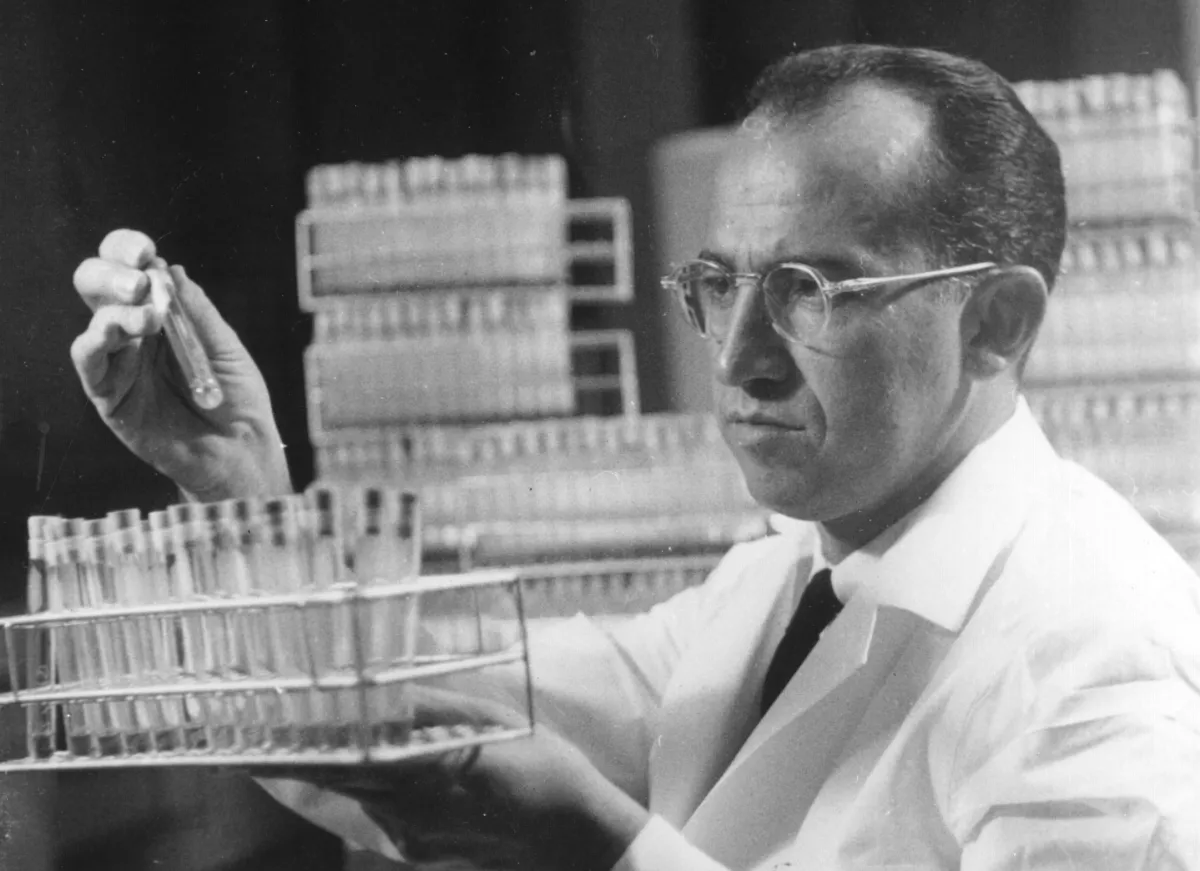 Photo: Jonas Salk, via www.thoughtco.com
By some estimates, more than fifty million metric tons of HeLa cells have been grown in laboratories since 1951. They have contributed to more than sixty thousand published scientific papers. They have touched virtually every corner of modern medicine.
Henrietta's family knew none of this until the 1970s, when a researcher tracking down information about HeLa's origins contacted her husband David. The family had no health insurance. Several of her children struggled with poverty and illness throughout their lives. They received nothing from the industries her cells had helped to build.
A System That Used Her Up
The ethical dimensions of Henrietta's story are not subtle, and they don't get easier with time.
Her cells were taken without her knowledge or consent, at a moment when Black patients in American hospitals had little legal protection and even less institutional power. The medical system that harvested what it needed from her body was the same system that provided her with inferior care in a segregated ward. The researchers who distributed her cells globally never asked her family's permission. The companies that eventually commercialized HeLa cell lines made fortunes. The Lackses made nothing.
Rebecca Skloot's 2010 book The Immortal Life of Henrietta Lacks brought these contradictions into sharp public focus, tracing both the science and the human cost with extraordinary care. It forced a conversation that American medicine had been quietly avoiding for decades: what do we owe the people whose bodies we learn from?
In 2013, the National Institutes of Health reached an agreement with the Lacks family, giving them some say in how the HeLa genome — which had been fully sequenced and published without their knowledge — would be used going forward. It was an acknowledgment, if not a remedy.
The Foundation Nobody Thanked
The deepest irony of Henrietta Lacks's story is not that she gave so much without receiving anything in return. It's that she gave it at all — that a woman denied basic dignity by the institution that was supposed to care for her became, in death, the invisible foundation beneath some of the greatest achievements in the history of that same institution.
Modern medicine did not save Henrietta Lacks. She was failed by a system that saw her as a body to be managed rather than a person to be healed. And yet, without her — without the particular, unrepeatable biology of this one woman from a Virginia tobacco field — that same system would have taken decades longer to reach the breakthroughs it eventually celebrated.
She was written off by every measure the medical establishment used to assign value. And she changed everything anyway.
The wrong path, in Henrietta's case, was never her own. It was the path the world chose for her. The remarkable thing — the thing that keeps her story alive more than seventy years later — is that she managed to matter profoundly despite it.