Nobody Ordered It. Everyone Bought It. Seven American Companies That Sold the Wrong Thing Right
Every entrepreneur has a plan. Most plans are wrong. The interesting question isn't whether the plan fails — it almost always does, at least partially — but what happens in the moment when the wrong product turns out to be the right one. Do you notice? Do you have the courage to follow it? Do you abandon the thing you started for the thing you accidentally found?
These seven American companies did. And the economy has never quite recovered.
1. Wrigley's — The Gum That Ate the Business Plan
William Wrigley Jr. arrived in Chicago in 1891 with $32 and a plan to sell soap. To sweeten the deal for wholesalers, he threw in free cans of baking powder with every order. When the baking powder proved more popular than the soap, he pivoted — now he was a baking powder man. To sweeten that deal, he started throwing in free sticks of chewing gum.
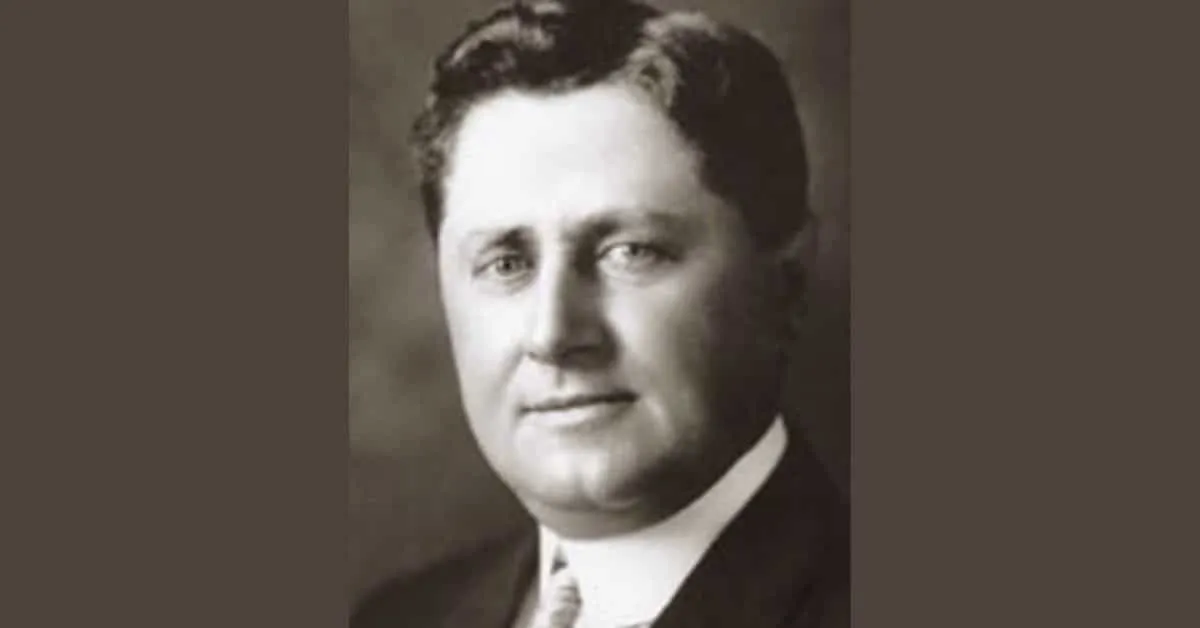 Photo: William Wrigley Jr., via www.snackhistory.com
You can see where this is going.
By 1893, Wrigley had introduced Juicy Fruit and Wrigley's Spearmint. By the early twentieth century, he was one of the wealthiest men in America and the owner of a baseball team and a private island. The soap is gone. The baking powder is gone. The gum that nobody ordered became one of the most recognized brands on the planet.
The lesson Wrigley drew from this wasn't complicated. He once said the secret to his success was simply paying attention to what people actually wanted. The trick was that he was selling something else when he figured it out.
2. Avon — The Books Nobody Read
In 1886, a door-to-door book salesman named David McConnell was struggling. Books were heavy, expensive, and hard to move from porch to porch across rural America. To get women to open their doors, McConnell started giving away small vials of homemade perfume as a bonus for sitting through his sales pitch.
 Photo: David McConnell, via www.kwls.org
The perfume disappeared. The books stayed on the shelf.
McConnell recognized the signal and founded the California Perfume Company — later renamed Avon — built entirely around a sales model he'd invented by accident. The direct-to-consumer approach, the network of independent female sales representatives, the emphasis on personal relationship over retail transaction: all of it grew from the moment a frustrated book salesman realized his freebie was outselling his actual product.
Avon would go on to become a billion-dollar enterprise and one of the largest employers of women in American business history. The books, in retrospect, were just the door knock.
3. Play-Doh — The Wallpaper Cleaner That Went to School
In the early 1950s, a Cincinnati compound manufacturer named Noah McVicker was producing a putty-like substance designed to clean coal residue from wallpaper. It worked reasonably well. It also had no future, because American homes were switching from coal heat to gas and oil, and the market for wallpaper cleaner was shrinking fast.
McVicker's sister-in-law, a nursery school teacher named Kay Zufall, was looking for a safe, non-toxic modeling material for her students. Someone handed her a can of the wallpaper compound. The kids loved it.
Zufall pushed McVicker to repackage and market it as a children's toy. He was skeptical but desperate. Rainbow Crafts launched Play-Doh in 1956. Within three years, the company had sold millions of cans. Within a decade, it was a cultural institution.
The wallpaper industry barely noticed. The toy industry never forgot.
4. Coca-Cola — The Cure That Became the Craving
John Pemberton was a pharmacist in Atlanta, Georgia, who spent most of the 1880s trying to develop a medicinal tonic. His 1886 creation was intended as a cure for headaches and morphine addiction — a syrup containing coca leaves and kola nuts, meant to be mixed with water and sold at pharmacies as a patent medicine.
A soda fountain operator mixed it with carbonated water by accident. Or maybe on purpose. The historical record is a little fuzzy on this point, but what isn't fuzzy is the reaction: people loved it.
Pemberton never fully grasped what he had. He sold the rights for $2,300 before he died in 1888. The buyers understood that the medicine was a distraction — this was a drink, a pleasure, a ritual. They stripped away the pharmaceutical pretense and sold the sensation.
Coca-Cola is now one of the most valuable brands in human history. The headache cure didn't survive. The accident that accompanied it conquered the world.
5. Listerine — The Floor Cleaner That Freshened Up
Developed in 1879 by Dr. Joseph Lawrence, Listerine was originally formulated as a surgical antiseptic — a general-purpose germ killer intended for operating rooms and wound treatment. It was also marketed, at various points, as a floor cleaner and a cure for gonorrhea. None of these applications made anyone particularly wealthy.
In the 1920s, the Lambert Pharmacal Company repositioned Listerine for a problem most Americans didn't know they had. The company essentially invented the social anxiety around bad breath — coining the term "halitosis" and running advertising campaigns that portrayed chronic mouth odor as a career-ending, romance-killing catastrophe.
Sales exploded. The floor cleaner became a bathroom staple. The surgical antiseptic became a morning ritual for millions of Americans who had never once worried about halitosis until a marketing team told them they should.
Sometimes the pivot isn't about finding a new product. It's about finding the right story for the product you already have.
6. Slack — The Game That Nobody Played
Stewart Butterfield had already failed at one video game company — the massively multiplayer online game Game Neverending, which shut down in 2004 — when he tried again with Glitch, a quirky browser-based game that launched in 2011 and quietly died in 2012. Two expensive failures. A team with nowhere to go.
Except that during the development of Glitch, the team had built an internal messaging tool to coordinate their work. It was fast, searchable, and genuinely better than the email chains and chat systems they'd been using before. When Glitch folded, Butterfield looked at what was left and realized the scaffolding was more valuable than the building it had been holding up.
Slack launched publicly in 2013. Within 24 hours, 8,000 companies had signed up. By 2019, it was valued at more than $20 billion. Salesforce acquired it in 2021 for $27.7 billion.
The game nobody played funded the tool everybody needed. Butterfield lost twice and won enormous.
7. Raytheon and the Microwave — The Chocolate That Melted a Market
In 1945, a Raytheon engineer named Percy Spencer was testing a magnetron — a component used in radar systems — when he noticed that a chocolate bar in his pocket had melted. Spencer was curious enough to experiment further. He pointed the magnetron at popcorn kernels. They popped. He pointed it at an egg. It exploded.
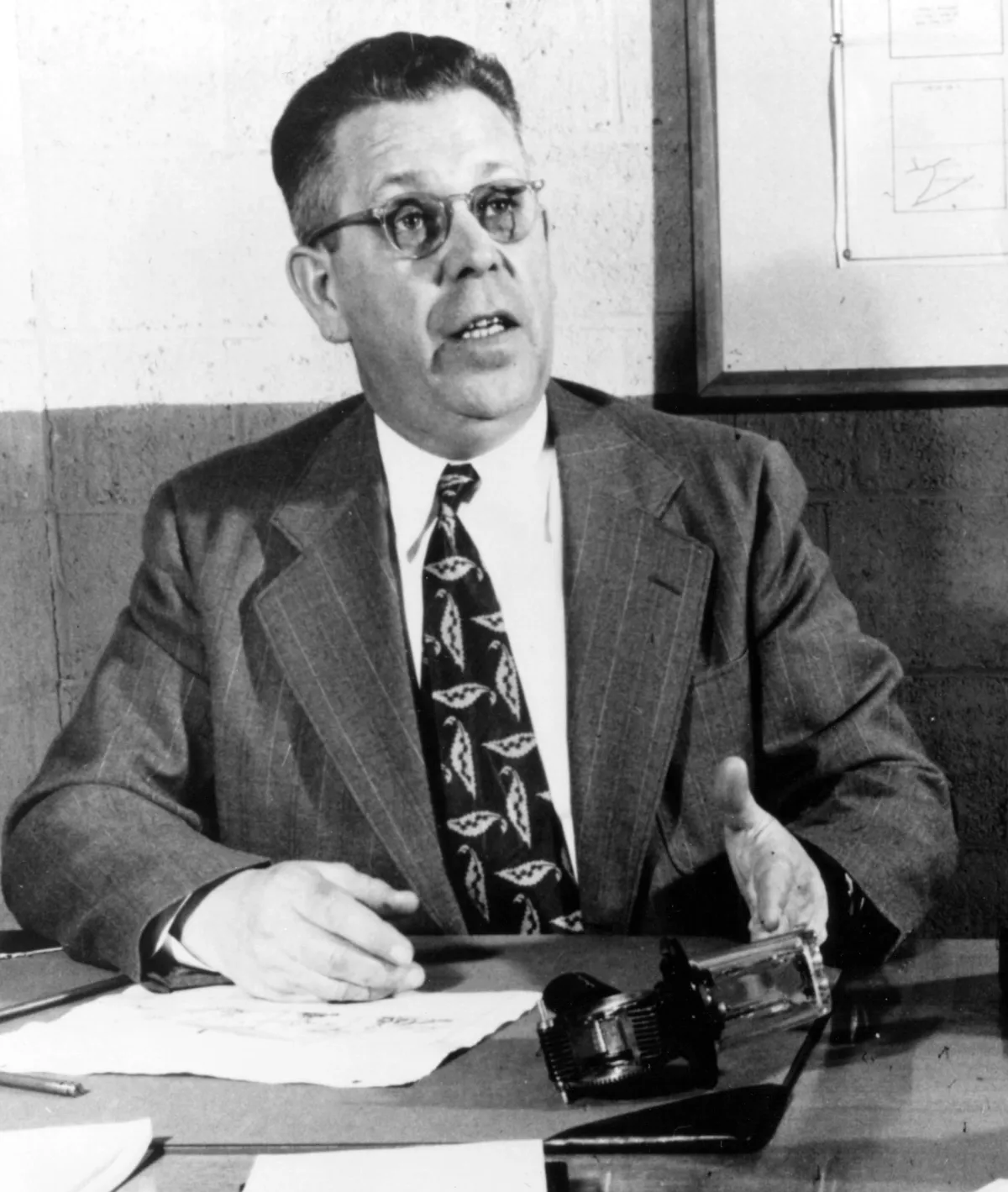 Photo: Percy Spencer, via www.massmoments.org
Raytheon was in the defense business. It had no interest in kitchen appliances. But Spencer filed a patent, and the company eventually introduced the first commercial microwave oven in 1947 — a six-foot-tall, 750-pound machine that cost around $5,000 and was marketed to restaurants and commercial kitchens.
It took decades for the technology to reach the American home in an affordable form. But when it did, it rewired how the country ate. The device that emerged from a radar lab and a melted candy bar is now in roughly 90 percent of American homes.
Spencer wasn't trying to change cooking. He was testing radar equipment. The wrong experiment, run by the right kind of curious person, became one of the most ubiquitous appliances in American history.
The Pattern in the Pivot
Look at these seven stories together and something becomes clear. None of these companies succeeded by being smarter than everyone else. They succeeded by being willing to follow the evidence when it pointed somewhere unexpected — to notice the melting chocolate, the popular perfume, the gum that outsold the soap.
The original plan wasn't a failure. It was a search. And sometimes you find what you're looking for by bumping into something you weren't.