Nobody Wanted It. Then Nobody Could Live Without It: Seven American Fortunes Born from Rejection
There's a certain type of entrepreneur that business schools quietly struggle to explain. Not the visionary who saw the future clearly and executed brilliantly. The other kind — the one who was almost certainly wrong, who ignored every signal the market was sending, who kept going out of some combination of stubbornness and blind faith, and then somehow ended up being right in ways nobody, including them, fully predicted.
America has produced a remarkable number of these people. Here are seven products that the public rejected completely before becoming fixtures of daily American life — and the people who refused to take the hint.
1. Bubble Wrap: Rejected Wallpaper That Became a Packing Legend
In 1957, engineers Alfred Fielding and Marc Chavannes were trying to make textured wallpaper. They sealed two shower curtains together and got something bubbly and strange that nobody wanted anywhere near their walls. They spent three years trying to find a market — greenhouse insulation was one attempt — before IBM started using it to protect computers during shipping.
Once the logistics industry caught on, there was no going back. Today, Sealed Air Corporation, the company built around that failed wallpaper experiment, generates billions in annual revenue. And somewhere along the way, the product became so beloved that popping it turned into a global stress-relief ritual. The wallpaper nobody wanted became the packaging material everyone fights over.
2. Listerine: A Surgical Antiseptic That Found Its Real Job by Accident
Listerine was originally formulated in 1879 as a surgical antiseptic — strong enough to clean operating rooms, definitely not designed for daily gargling. It was also sold, at various points, as a floor cleaner and a gonorrhea treatment. Neither market particularly took off.
It wasn't until the 1920s that the Lambert Pharmacal Company started marketing Listerine for "halitosis" — a medical term they essentially popularized themselves — and built an advertising campaign around social anxiety and the fear of being secretly offensive to people around you. Americans, it turned out, were deeply worried about their breath once someone told them they should be. Within seven years, the company's profits increased by nearly 4,000 percent. The product that couldn't find a market invented one instead.
3. Corn Flakes: A Health Cure That Became Breakfast
John Harvey Kellogg did not create corn flakes because he thought Americans needed a convenient breakfast option. He created them as part of a strict dietary regimen at his Battle Creek Sanitarium in Michigan, where he was convinced that bland, grain-based foods would suppress what he considered dangerous physical urges in his patients. The context is, by contemporary standards, deeply strange.
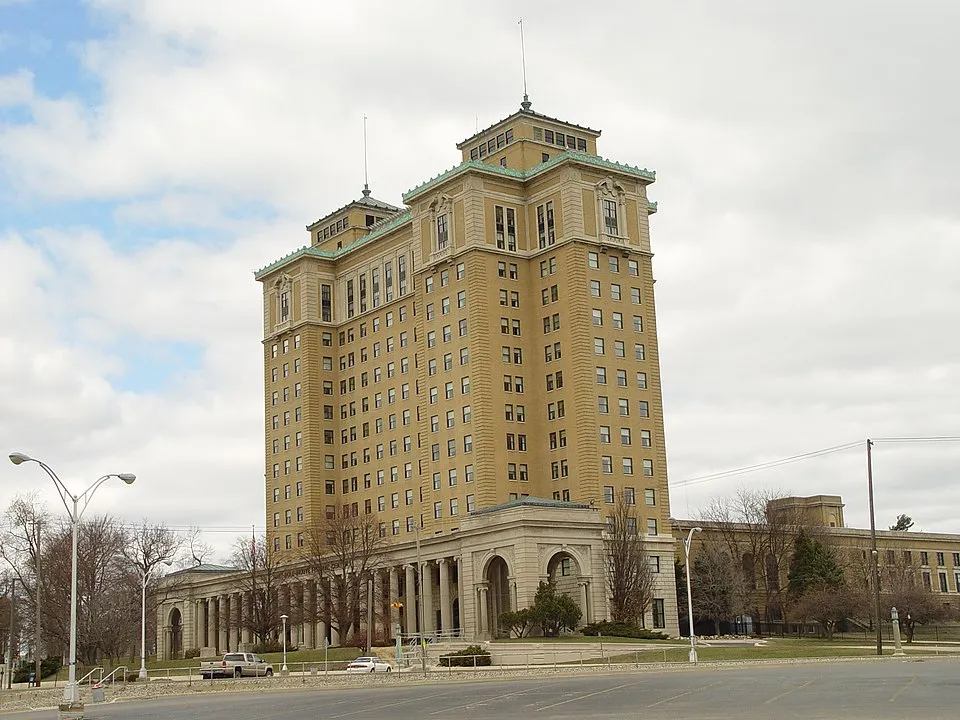 Photo: Battle Creek Sanitarium, via upload.wikimedia.org
Patients found the flakes tolerable at best. The broader public, when first introduced to the concept, was largely indifferent. It was Kellogg's brother Will who saw commercial potential, added sugar over John's furious objections, and began mass-marketing the product nationally. Will and John never really recovered their relationship. Will built a cereal empire. The wrong Kellogg ended up changing how America starts its mornings.
4. Post-it Notes: The Glue That Wasn't Good Enough
In 1968, 3M scientist Spencer Silver developed an adhesive that was, by his own admission, a failure. It stuck to things, but not very well. It peeled off cleanly and left no residue. For a company in the business of making things stay together permanently, this was not a useful product. Silver spent years trying to convince 3M that the low-tack adhesive had some application worth pursuing. He was largely ignored.
It took a colleague named Art Fry, frustrated that his bookmark kept falling out of his church hymnal, to realize that a not-very-sticky note you could move around without damaging paper was exactly what the world needed. 3M's own market research, when they finally tested the product, suggested consumers didn't want it. They sent out samples anyway. The reorder requests told a different story. Post-it Notes launched nationally in 1980 and became one of the most successful office products in history. The failed adhesive that couldn't stick right turned out to be perfectly, specifically useful.
5. Sriracha: The Hot Sauce That Sat in Obscurity for Decades
David Tran started making his rooster-branded hot sauce in Los Angeles in 1980, selling out of his van to Vietnamese restaurants and Asian grocery stores that were willing to give it a shot. For years, Huy Fong Foods operated in near-total obscurity outside of immigrant communities, with no advertising budget and no mainstream retail presence.
 Photo: David Tran, via images.inc.com
Food industry veterans who encountered the product weren't enthusiastic. It was too garlicky, too specific, too unfamiliar for the American palate that the experts claimed to understand. Tran kept making it. Chefs started using it in ways he never anticipated. A slow burn of word-of-mouth, stretching across nearly two decades, eventually reached a tipping point in the 2000s when food media caught on. By the 2010s, Sriracha was everywhere — on grocery store shelves, in fast food chains, on potato chips and popcorn and lip balm. The hot sauce the mainstream didn't want became one of the defining condiment stories of the century.
6. Tupperware: The Plastic That Nobody Bought Until Women Sold It to Each Other
Earl Tupper's airtight plastic containers hit department store shelves in the late 1940s and went essentially nowhere. Consumers couldn't figure out how to use the burping seal mechanism. Without a demonstration, the product was baffling. Retailers lost interest. Tupper was running out of ideas.
What saved Tupperware was not a better product or a better store placement. It was Brownie Wise, a single mother and saleswoman from Georgia who had figured out that the containers sold brilliantly when demonstrated in someone's living room among friends. The Tupperware party was born out of necessity and social intuition, not corporate strategy. Wise became vice president of Tupperware Home Parties and was the first woman to appear on the cover of Business Week. Tupper eventually fired her in a dispute that remains one of business history's pettier moments, kept all her shares, and sold the company shortly after. The product nobody bought in stores became one of the most successful direct-sales models in American history.
7. Doritos: The Snack Born from Theme Park Trash
The original Doritos were made from leftover tortillas that would otherwise have been thrown away at Casa de Fritos, a restaurant inside Disneyland, in the early 1960s. Frito-Lay executives who tried the product were not immediately convinced it had national potential. The plain toasted corn chip, when it did launch nationally in 1966, was met with modest consumer interest at best.
It wasn't until the nacho cheese flavor arrived in 1972 — bold, artificial, aggressively flavored in a way that felt almost transgressive — that Doritos became the cultural phenomenon they are today. The snack born from theme park leftovers, ignored in its original form, eventually became one of the best-selling snack brands in the world. The wrong ingredient, from the wrong place, at the wrong time, turned out to be exactly right.
The pattern across all seven of these stories isn't genius, exactly. It's something harder to teach and easier to dismiss: the refusal to believe that the market's first answer is its final one. Sometimes the product is wrong. Sometimes the timing is wrong. Sometimes the audience just hasn't met the thing they're about to love yet.
The people who built fortunes on rejected products weren't always smarter than the critics. They were just more committed to finding out whether the critics were right. Usually, eventually, they weren't.