Burned, Curdled, and Completely Wrong: Seven American Food Brands That Were Born in a Disaster
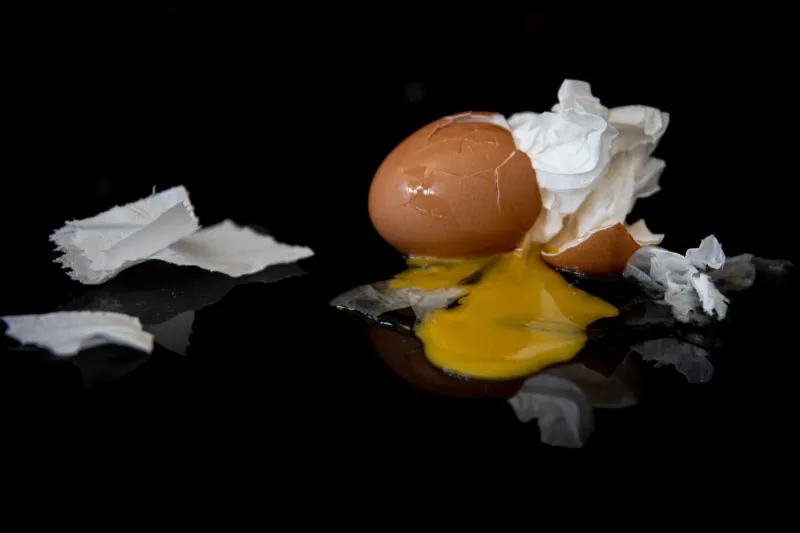
There's a version of American food history that's very clean. A founder has a vision. They perfect a recipe. The public embraces it. A brand is born.
Then there's what actually happened.
The real origin stories behind some of America's most enduring food brands involve batches that burned, formulas that curdled, ingredients that arrived damaged, and experiments that failed so completely they accidentally succeeded. These aren't footnotes. They're the whole story.
1. Kellogg's Corn Flakes: The Batch Nobody Wanted to Throw Away
In 1894, Dr. John Harvey Kellogg and his brother Will Keith were running a sanitarium in Battle Creek, Michigan, and trying to develop bland, digestible foods for their patients. One evening, a batch of boiled wheat was left out too long and went stale. Instead of tossing it, they ran it through the rollers anyway.
What came out were thin, crispy flakes instead of the smooth sheets they'd been aiming for. The patients liked them. The brothers patented the process. Will eventually sweetened the formula against his brother's wishes — a family dispute that permanently fractured their relationship — and launched what became the Kellogg Company.
The cereal that defined American breakfast for more than a century started as a batch of forgotten, overaged dough that nobody had the heart to waste.
2. Coca-Cola: The Headache Remedy That Became a Soft Drink Empire
John Pemberton was a pharmacist in Atlanta trying to make a medicinal syrup in 1886. His original formula was meant to treat headaches and fatigue and contained, among other things, coca leaves and kola nuts. The syrup was supposed to be mixed with plain water.
One day, a soda fountain employee — accounts differ on whether it was deliberate or accidental — mixed it with carbonated water instead. The result was something nobody had been trying to create: a fizzy, slightly sweet, vaguely medicinal drink that people just wanted more of.
Pemberton sold the formula before he had any idea what he'd stumbled onto. The buyer, Asa Candler, turned it into one of the most recognized commercial products in human history. The entire empire traces back to a soda fountain mistake that the original inventor didn't live long enough to fully appreciate.
3. Post-it Notes Aren't Food — But Chips Ahoy Almost Weren't Cookies
Let's talk about the chocolate chip itself. Ruth Wakefield, running the Toll House Inn in Whitman, Massachusetts in 1937, was making chocolate cookies and ran out of baker's chocolate. She broke up a bar of Nestlé semi-sweet chocolate and mixed the pieces into her dough, expecting them to melt and distribute evenly through the batter the way proper baking chocolate would.
 Photo: Toll House Inn, via cdn.moviefone.com
They didn't melt. They stayed in chunks. The cookie that came out wasn't what she was making. It was something better.
Wakefield sold the recipe to Nestlé in exchange for a lifetime supply of chocolate. Nestlé began printing it on the back of their chocolate bars. The chocolate chip cookie became the most popular homemade cookie in America. The whole thing happened because a substitution didn't behave the way it was supposed to.
4. Worcestershire Sauce: The Barrel They Almost Poured Down the Drain
In the 1830s, Lord Marcus Sandys returned to England from Bengal with a recipe for a sauce he'd grown fond of. He commissioned the chemists John Lea and William Perrins to recreate it. The result was so pungent and so aggressively unpleasant that the barrel was set aside in a cellar and essentially forgotten.
Months later, someone rediscovered it. The fermentation had transformed the contents into something rich, complex, and deeply savory. Lea & Perrins bottled it. Worcestershire sauce became a staple condiment across England and eventually America.
The sauce that anchors Bloody Marys and marinades across the country was originally considered a failed experiment left to rot.
5. Popsicles: The Forgotten Cup on a Cold Porch
In 1905, eleven-year-old Frank Epperson left a cup of powdered soda mix and water on his San Francisco porch with a stirring stick still in it. The temperature dropped overnight. In the morning, he found the mixture frozen solid around the stick.
 Photo: San Francisco, via media.timeout.com
He called it an Epsicle. He patented the idea eighteen years later, in 1923, renamed it at his children's suggestion, and sold the rights to the Joe Lowe Company. Popsicles became one of the defining treats of the American summer.
The entire concept started with a child forgetting a cup outside in the cold.
6. Nashville Hot Chicken: The Revenge That Misfired Beautifully
The origin story of Nashville hot chicken is more personal than most. In the 1930s, Thornton Prince III — a well-known figure in Nashville's African American community — came home very late one night. His girlfriend, furious at his absence, decided to make him regret it. She loaded his fried chicken with as much cayenne pepper and hot spice as she could manage, intending to punish him.
Prince loved it.
He loved it so much that he started serving the incendiary version at what became Prince's Hot Chicken Shack, a Nashville institution that's been operating for decades and spawned an entire culinary movement. The dish that launched a thousand restaurant concepts was designed as an act of domestic revenge.
7. Brown N Serve Rolls: The Oven That Went Wrong at the Right Moment
In the late 1940s, a baker named Joe Gregor in Avon Park, Florida, was called away from his oven in the middle of baking rolls. When he came back, he found them partially cooked but not ruined — pale, firm, and structurally intact, but nowhere near done. On a hunch, he finished baking them later.
They tasted fine. Better than fine, actually. The two-stage process worked. He brought the idea to a commercial bakery, and the partially baked, finish-at-home dinner roll became a product that American households stocked for decades.
The interruption that pulled him away from the oven was the invention.
The American Accident Factory
What connects these seven stories isn't carelessness. It's a particular kind of attention — the ability to look at something that went wrong and ask whether it might actually be something new.
The American food industry has always been more chaotic than its marketing suggests. Behind the clean packaging and the founding-father mythology, there are forgotten batches, impatient chemists, misfired revenge plans, and children who left their drinks outside overnight.
The wrong ingredient. The wrong temperature. The wrong timing. The wrong everything.
And somehow, every single time, something worth eating came out of it.