Locked Away and Looking West: The Disgraced Officer Who Charted America's Frontier From Behind Bars
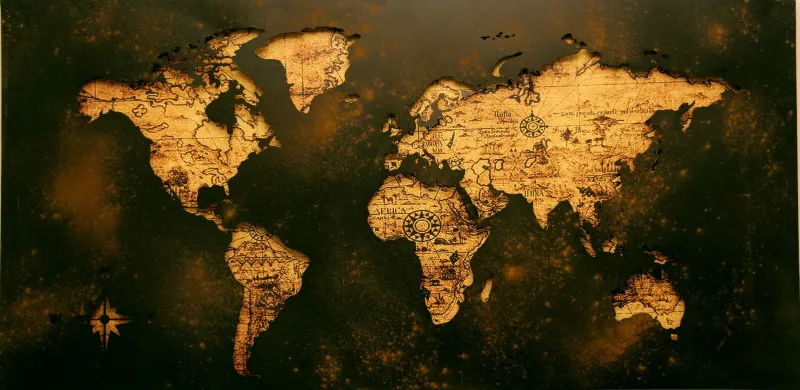
Locked Away and Looking West: The Disgraced Officer Who Charted America's Frontier From Behind Bars
There's a particular cruelty in being forced to stop. For men like John C. Frémont — restless, ambitious, built for open terrain and forward motion — confinement wasn't just punishment. It was a kind of slow suffocation. And yet, in the strange arithmetic of history, the moments when the world yanked the ground from beneath his feet turned out to be the moments when he did his most lasting work.
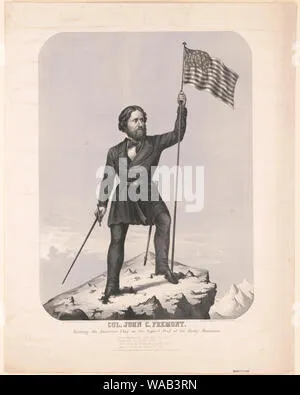 Photo: John C. Frémont, via l450v.alamy.com
Frémont was, by any measure, a man of spectacular contradictions. A celebrated explorer, a political firebrand, a failed presidential candidate, and a general who managed to get himself relieved of command not once but repeatedly. He was the kind of person who generated enemies the way thunderstorms generate lightning — naturally, and without much apparent effort. But before all of that, before the court-martials and the political disasters, he was simply a young officer handed a mandate that seemed almost absurd: go west, and tell us what's out there.
The Man They Called the Pathfinder
In the 1840s, the American West was less a place than a rumor. Trappers had crossed it. Native nations had lived within it for thousands of years. But for the growing republic looking hungrily toward the Pacific, it remained largely unmapped in any form useful to settlers, soldiers, or government planners. Washington needed someone to change that.
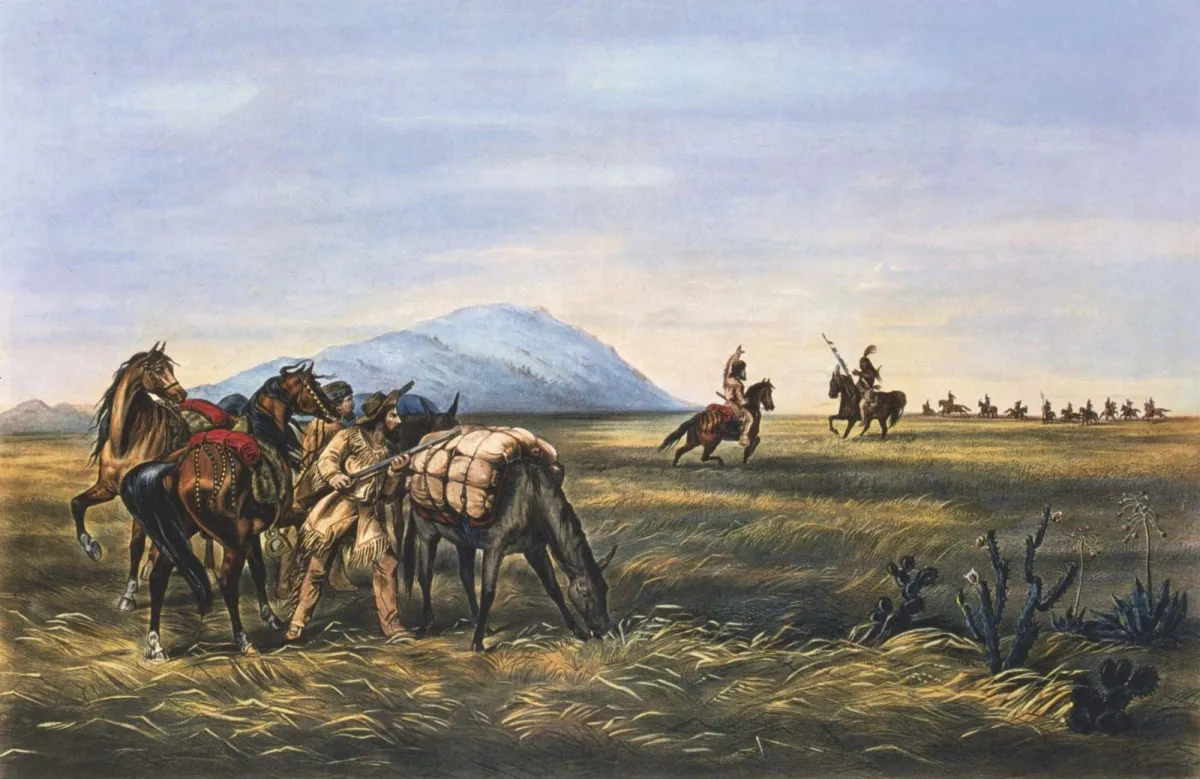 Photo: American West, via cdn.britannica.com
Frémont's three major expeditions between 1842 and 1845 produced something genuinely remarkable. He traveled with skilled cartographers and scientists, recorded elevations, river courses, mountain passes, and water sources with meticulous precision, and returned with reports that read less like military dispatches than like adventure literature. His wife, Jessie Benton Frémont — daughter of the powerful Missouri senator Thomas Hart Benton — helped transform his raw field notes into polished, readable narratives that captured the public imagination. The reports sold widely. Emigrants heading to Oregon and California carried them like scripture.
He was, for a brief shining moment, exactly what America wanted him to be.
The Fall
Then came California, and the Bear Flag Revolt, and a collision of egos that would define the rest of his life.
In 1847, Frémont found himself caught between two commanding officers — General Stephen Kearny and Commodore Robert Stockton — each claiming authority over California in the chaotic aftermath of the Mexican-American War. Frémont sided with Stockton. Kearny won the jurisdictional argument. Frémont was arrested, marched back to Washington under escort, and court-martialed on charges of mutiny and insubordination.
The trial was a sensation. Frémont was found guilty. President James Polk remitted the sentence, but Frémont — proud, furious, unwilling to accept even a pardoned verdict — resigned his commission anyway. Just like that, the Pathfinder was a civilian.
He was thirty-four years old.
When Stillness Became a Tool
Here is where the story gets interesting. Here is where the wrong path turns out to lead somewhere nobody expected.
Stripped of his rank and his institutional authority, Frémont didn't retreat. He reorganized. He returned to his notes, his journals, his accumulated observations from years of crossing terrain that most Americans had never seen and never would. He began the painstaking work of synthesis — pulling together not just his own records but accounts from fellow travelers, Native guides, and earlier explorers whose work had never been properly integrated into a coherent whole.
The maps and geographical memoirs he produced during this period of forced civilian life were, in many respects, more thorough than anything he had managed to assemble in the field. The pressure of movement, the demands of command, the daily emergencies of frontier travel — all of that had been stripped away. What remained was time, memory, and a mind that had spent years absorbing the shape of a continent.
His 1848 map of the American West — produced in collaboration with cartographer Charles Preuss, who had accompanied him on his expeditions — became the standard reference for overland travelers for years. It showed mountain passes, river crossings, water sources, and distances with a clarity that earlier maps had never achieved. Wagon train leaders consulted it. Army officers carried it. It was, in the most literal sense, a guide to the unknown.
And it was born, in no small part, from the stillness of disgrace.
What the Forced Stop Actually Produced
There's a temptation to romanticize this — to turn Frémont's downfall into a tidy parable about silver linings. The truth is messier. He never fully recovered his reputation in the way he hoped. His fourth expedition, launched in the winter of 1848 in an attempt to find a southern railroad route, ended in catastrophe, with men dying of cold and starvation in the San Juan Mountains. His political career was turbulent and ultimately disappointing. He died in 1890, nearly broke, in a New York boarding house.
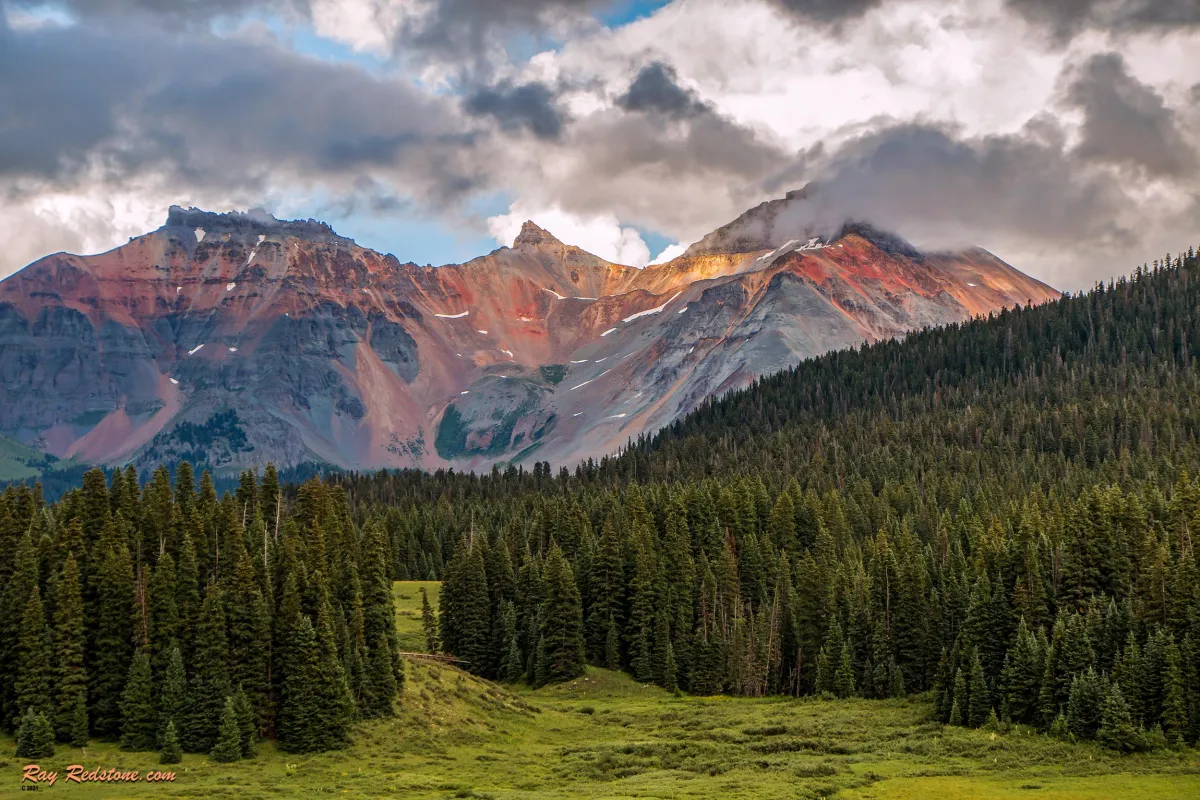 Photo: San Juan Mountains, via i.redd.it
But the maps endured. The surveys endured. The meticulous, patient work of organizing and recording what he had seen — work that only became possible when the relentless forward momentum of his career was violently interrupted — shaped how an entire generation understood the land they were crossing.
The settlers who followed those lines across the continent didn't know they were navigating by the labor of a disgraced man. They just knew the map was good.
The Lesson the Frontier Left Behind
Frémont's story doesn't fit the standard American success narrative, which is probably why it tends to get compressed into a footnote. We prefer our heroes unambiguous, their arcs clean. A man who achieved his greatest work during a period of professional humiliation and enforced stillness doesn't map neatly onto the mythology of relentless forward progress.
But that's precisely why it matters.
The American West was charted, in part, by someone the establishment had decided was finished. The maps that guided hundreds of thousands of emigrants toward a new life were drawn, in significant measure, during the years when the man who drew them had been told his path was over.
Sometimes the wrong path isn't a detour. Sometimes it's the only route that leads anywhere worth going.