Four Walls, No Distractions: The Remarkable Americans Who Did Their Greatest Work Behind Bars
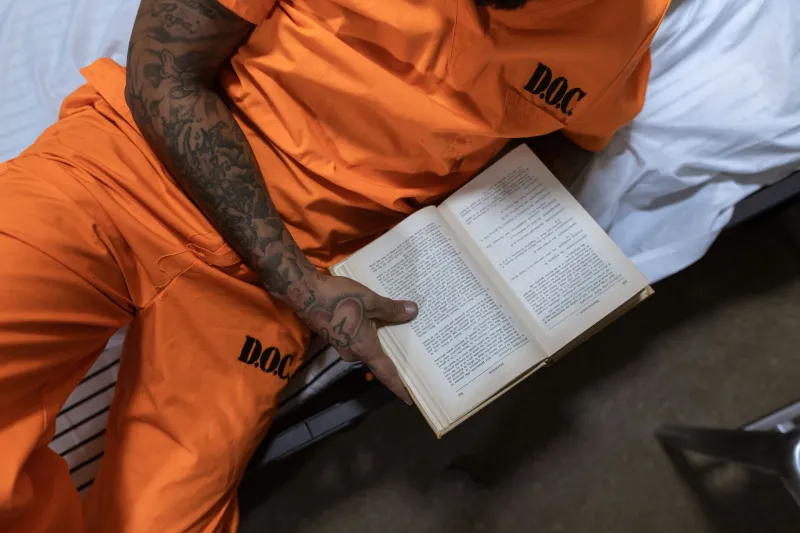
There is a particular quality to the silence inside a cell. No meetings to attend. No social obligations to manage. No ordinary life to retreat into when the thinking gets difficult. Just time — enormous, unbroken, almost hostile in its abundance — and whatever the mind can do with it.
For most people, that silence is only punishment. But for a few remarkable Americans, incarceration became something stranger and harder to categorize: the condition under which their most original work became possible.
This is not an argument for imprisonment. It's an argument for paying attention to what people do when everything else is taken away.
The Man Who Wrote the Future in a Federal Penitentiary
Chester Himes arrived at the Ohio State Penitentiary in 1929 at the age of nineteen, convicted of armed robbery. He was young, angry, and had already survived a series of accidents and misfortunes that would have broken most people. Prison was supposed to finish the job.
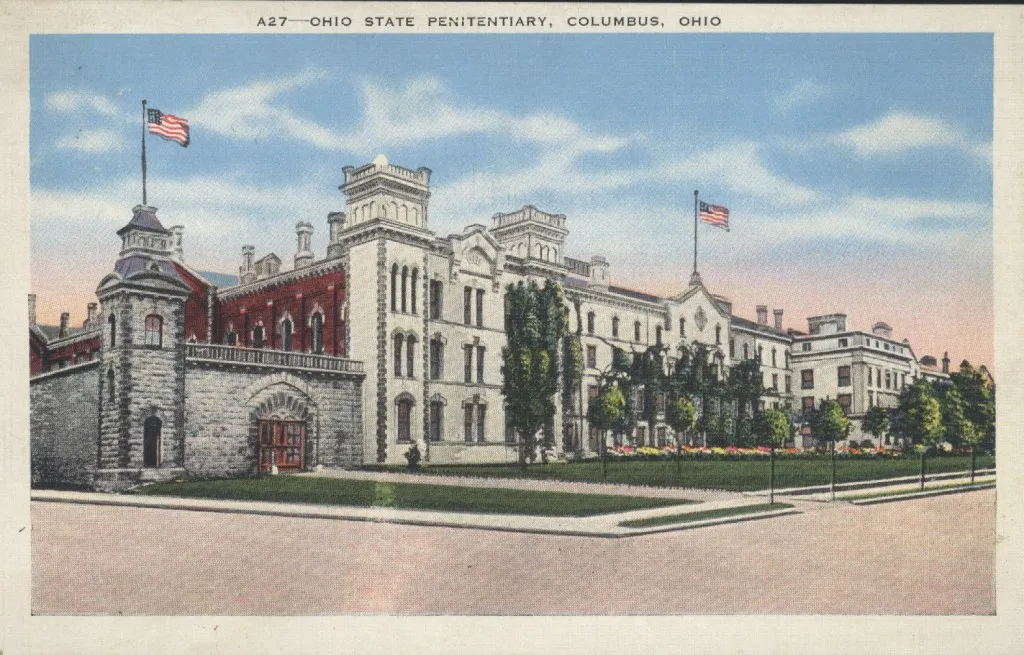 Photo: Ohio State Penitentiary, via 1.bp.blogspot.com
Instead, Himes started writing.
He began submitting short stories to magazines while still incarcerated, and by the time he was paroled in 1936, he had published in Esquire — one of the most prestigious literary venues in America. The Ohio State Penitentiary had also suffered a catastrophic fire in 1930, killing more than three hundred inmates. Himes witnessed it. He wrote about it. The experience of being trapped while people burned around him became material that fed his fiction for decades.
Himes went on to write some of the sharpest crime fiction in American literary history, including his Harlem Detective series, which gave the world Coffin Ed Johnson and Grave Digger Jones. He never stopped writing about confinement, about rage, about the American systems that crushed people and the people who refused to stay crushed.
The cell didn't make him a writer. But it gave him the uninterrupted time and the firsthand fury that shaped everything he wrote afterward.
The Prisoner Who Taught America to Read Itself Differently
Malcolm Little entered the Norfolk Prison Colony in Massachusetts in 1948. He left it as Malcolm X.
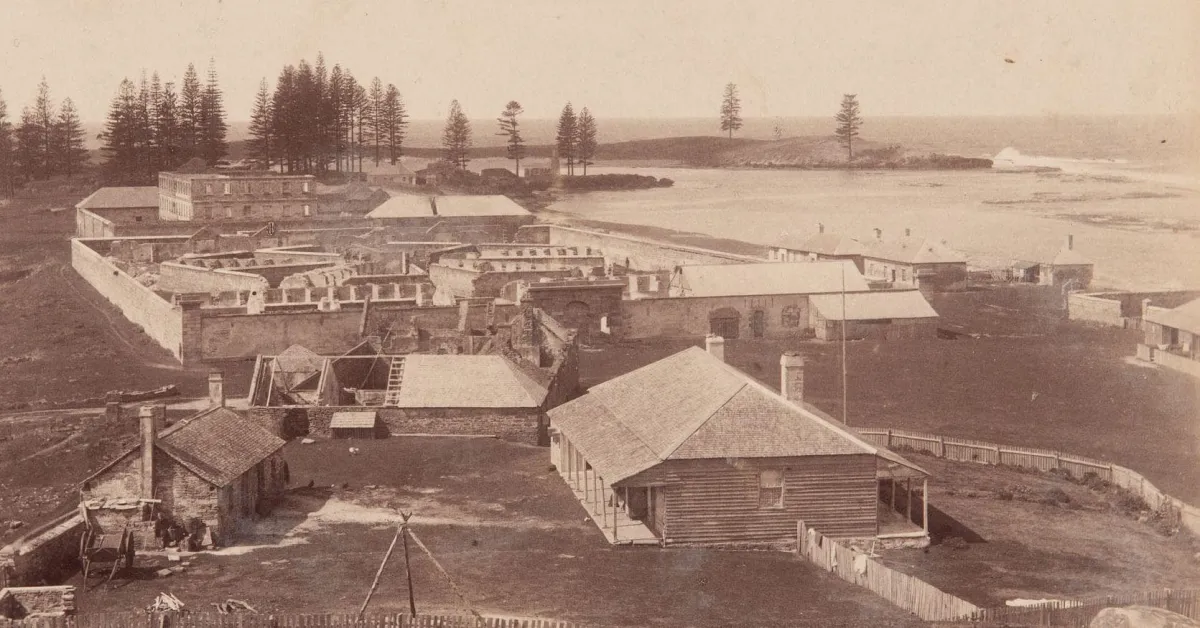 Photo: Norfolk Prison Colony, via imgix.ranker.com
The transformation is well known in its broad outlines, but the specific mechanism of it deserves closer examination. Malcolm was, by his own account, a poor reader when he arrived. He was bright, furiously so, but formal education had failed him in the particular ways it tended to fail Black boys in mid-century America. Prison gave him a library and something rarer: uninterrupted hours in which to use it.
He copied the dictionary by hand, starting at the letter A, working through it page by page, building vocabulary the way a laborer builds a wall — one piece at a time, day after day. He read history, philosophy, and theology with the systematic intensity of someone who understood that he was educating himself in the only institution that would actually let him in.
What emerged from that self-directed curriculum wasn't just a more literate man. It was one of the most formidable public intellectuals of the twentieth century — a speaker and thinker whose influence on American political and cultural life is still being measured.
The education that shaped him most completely happened inside a cell, in a library, alone with books that the formal world had never pointed him toward.
The Forger Who Became a Genuine Artist
Mark Landis spent years as one of the most prolific art forgers in American history, donating fake paintings to museums across the country — a scheme that was unusual because he never accepted money for the forgeries and was therefore nearly impossible to prosecute. He was eventually exposed, but the legal consequences were limited.
The more interesting figure for this story is someone older and less celebrated: Robert Stroud, the so-called Birdman of Alcatraz, whose story is usually told as a Hollywood drama about solitary confinement and stubborn survival.
The real story is about science.
Stroud spent decades in federal custody — first at Leavenworth, then at Alcatraz — much of it in isolation. At Leavenworth, he was permitted to keep canaries in his cell. A hobby became an obsession. The obsession became research. Stroud taught himself enough about avian pathology to identify and treat diseases in birds that veterinary science hadn't fully characterized. He wrote two books on canary diseases that remained reference texts in the field for years after his death.
He had no formal scientific training. He had no laboratory. He had a federal prison cell, a population of birds, and decades of uninterrupted time. The work he produced was recognized by ornithologists and bird breeders as genuinely valuable — not as a curiosity from a prisoner, but as actual science.
The Songwriter Who Found His Voice in a Louisiana Jail
Leadbelly — Huddie Ledbetter — had one of the most complicated relationships with incarceration in American music history. He served time in Texas and Louisiana on serious charges, and his story is not one that can be romanticized without acknowledging the brutal realities of Southern prison labor in the early twentieth century.
But what happened to his music inside those institutions is worth examining honestly.
Leadbelly was already a gifted musician before his first incarceration. Inside the Angola prison farm, he played for fellow prisoners and for guards. He played for the warden. He reportedly played for the Governor of Texas, and the story — disputed but persistent — is that his music helped earn him a pardon.
More concretely: the years inside gave him a vast, captive audience for whom music was one of the only available forms of relief, and that audience shaped what he played and how he played it. The songs he carried out of prison — "Midnight Special," "Goodnight, Irene," "Cotton Fields" — became foundational texts of American folk and blues. They were recorded by everyone from Pete Seeger to Creedence Clearwater Revival to the Rolling Stones.
The music Leadbelly made in and around those prison years didn't just survive. It became the bedrock of American popular music in the second half of the twentieth century.
What the Cell Strips Away
These stories don't share a crime, a sentence, or a circumstance. What they share is something harder to name — a quality of enforced attention. The removal of every alternative. The elimination of every comfortable distraction.
In the outside world, even the most disciplined creative people spend enormous energy managing the noise of ordinary life. Prison, at its most brutal, does one thing that the outside world almost never does: it removes the noise completely.
What's left is only the work. And for a small number of people across American history, that was enough.
None of them needed a cell to be extraordinary. But the cell, in each case, gave them something that the free world had never quite managed to offer: the time and the silence to find out exactly what they were capable of.
Some of history's most original thinking happened precisely because its authors had nowhere else to go. That's not an argument for confinement. It's an argument for what the human mind does when you finally stop giving it somewhere to hide.