Born on Four Wheels: The American Dreams That Started With a Tank of Gas and a Prayer
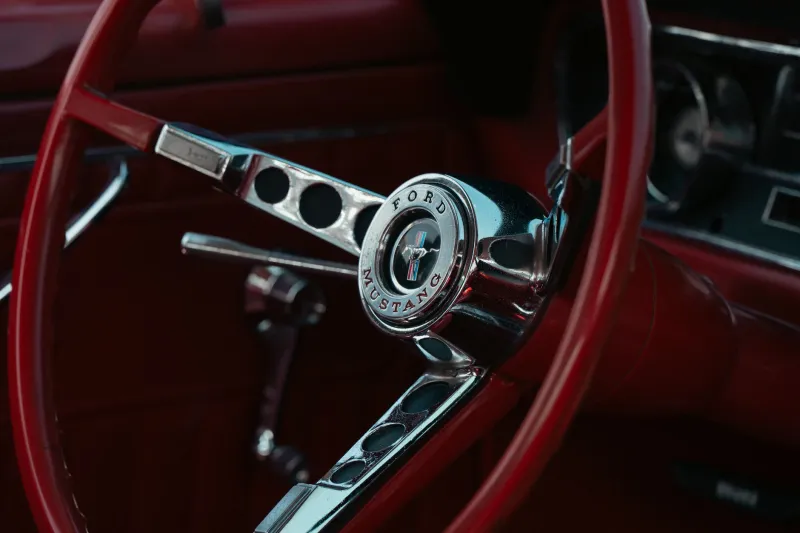
The Office That Never Stayed Still
In the mythology of American entrepreneurship, we celebrate the garage startups and kitchen table enterprises. But there's another breed of founder that rarely gets recognition: the ones who built empires from the front seat of their car. No fixed address, no business plan, no investors—just a vehicle, a vision, and the radical belief that success doesn't require a traditional office space.
These mobile moguls discovered what modern digital nomads are just beginning to understand: sometimes the best way to build something lasting is to keep moving.
State Farm: Born in a Backseat Brainstorm
George Mecherle was a farmer-turned-insurance-salesman driving the dusty roads of central Illinois in 1922 when inspiration struck during a particularly long stretch between farm visits. Sitting in his Model T, he realized that farmers were getting gouged by city-based insurance companies that didn't understand rural risks.
 Photo: George Mecherle, via www.atlaso.cz
Mecherle started sketching out his business model on the back of policy forms spread across his dashboard. His revolutionary idea: create an insurance company owned by the policyholders themselves, cutting out the middleman profits that made coverage so expensive for rural Americans.
The first State Farm Mutual Automobile Insurance Company meeting was held in Mecherle's car, parked outside a Bloomington, Illinois courthouse. He'd convinced a handful of local farmers to invest $25 each, using his car hood as a makeshift conference table to sign the incorporation papers.
Today, State Farm insures one in five American cars. Not bad for a company that literally started in one.
Dell: The Dorm Room That Moved to Four Wheels
Michael Dell's origin story usually focuses on his University of Texas dorm room, but the real breakthrough came when he outgrew that 12x12 space and moved his computer assembly operation into his car. In 1984, the 19-year-old entrepreneur was driving around Austin with a trunk full of computer components, assembling custom PCs for customers in parking lots and coffee shop booths.
Dell's mobile workshop allowed him to do something revolutionary: meet customers wherever they were comfortable. Instead of forcing buyers to visit a sterile computer store, he'd show up at their office or home with exactly the machine they'd ordered, assembled fresh and tested on the spot.
The car-based business model taught Dell lessons about efficiency and customer service that would later transform the entire computer industry. When he eventually moved into a proper facility, he maintained the same direct-to-customer approach that had made his mobile operation successful.
Mary Kay Cosmetics: Beauty in Motion
Mary Kay Ash spent years driving from house to house across Texas, selling Stanley Home Products from the trunk of her car. But it was during those long drives between suburban neighborhoods that she developed the business philosophy that would make her one of America's most successful female entrepreneurs.
 Photo: Mary Kay Ash, via wallpapercave.com
Stuck in traffic on a Houston freeway in 1963, Ash had an epiphany about everything that was wrong with the companies she'd worked for. She grabbed a napkin from her glove compartment and started writing down her vision for a business that would actually support women instead of holding them back.
By the time she reached her destination, she'd outlined the entire Mary Kay business model: direct sales, unlimited earning potential, and a corporate culture that treated distributors like family instead of employees. Her car had become an incubator for what would become a billion-dollar empire.
Southwest Airlines: The Napkin That Launched a Thousand Flights
Rollin King and Herb Kelleher were driving between San Antonio and Dallas in 1966 when they started complaining about how expensive and complicated air travel had become. King pulled over at a roadside diner and grabbed a cocktail napkin to sketch out his idea for a simple airline that would fly between Texas's three major cities.
 Photo: Herb Kelleher, via www.citypng.com
The business plan they developed in that car and refined over pie at the diner became Southwest Airlines. Their revolutionary insight—that air travel should be as simple and affordable as taking a bus—came from being stuck in a car for hours, watching other drivers make the same tedious journey they were making.
That napkin sketch is now displayed in Southwest's headquarters, a reminder that some of the best business ideas come not from boardrooms but from the frustration of being trapped in traffic with time to think.
Domino's Pizza: Delivering More Than Food
Tom Monaghan bought a struggling pizza shop in 1960 with $75 down and a promise to pay the rest later. But his real breakthrough came when he realized that his delivery car wasn't just transportation—it was a mobile advertisement, a quality control laboratory, and a customer service training ground all rolled into one.
Monaghan started timing his drivers' routes, testing different car configurations to keep pizzas hot, and using delivery feedback to improve his recipes. His car-based research led to innovations like heat-retaining delivery bags and the famous "30 minutes or it's free" guarantee.
The mobile laboratory approach helped Domino's perfect the science of food delivery decades before anyone had heard of DoorDash or Uber Eats.
Enterprise Rent-A-Car: Built on Borrowed Wheels
Jack Taylor started Enterprise in 1957 with seven cars and a simple insight he'd developed during his years as a traveling salesman: most people didn't need to own a car, they just needed access to one when their regular transportation failed them.
Taylor's first "office" was his personal vehicle, which he'd drive to customers' homes or workplaces to deliver rental cars personally. This mobile service model—bringing the car to the customer instead of making them come to you—became Enterprise's signature advantage over traditional rental companies.
The company that started with one man and his car is now the largest car rental business in America.
The Road to Success
What united all these mobile entrepreneurs wasn't just their willingness to work from their cars—it was their understanding that being unmoored from traditional business infrastructure could actually be an advantage. Without the overhead of office rent or the constraints of fixed locations, they could be more responsive to customers, more efficient with resources, and more creative with solutions.
They proved that sometimes the best way to build something permanent is to start by refusing to stay in one place. In America, the open road has always been a symbol of possibility. These entrepreneurs made it a launching pad for empire.