Born from Chaos: Seven Iconic American Foods That Started as Complete Accidents
When Desperation Meets Deliciousness
America's most iconic foods didn't emerge from test kitchens or focus groups. They were born in moments of panic, desperation, and outright disaster—then somehow became the dishes that define our national palate. These accidental masterpieces prove that sometimes the wrong ingredients at the wrong time create exactly the right thing.
Nachos: Forty Minutes to Genius
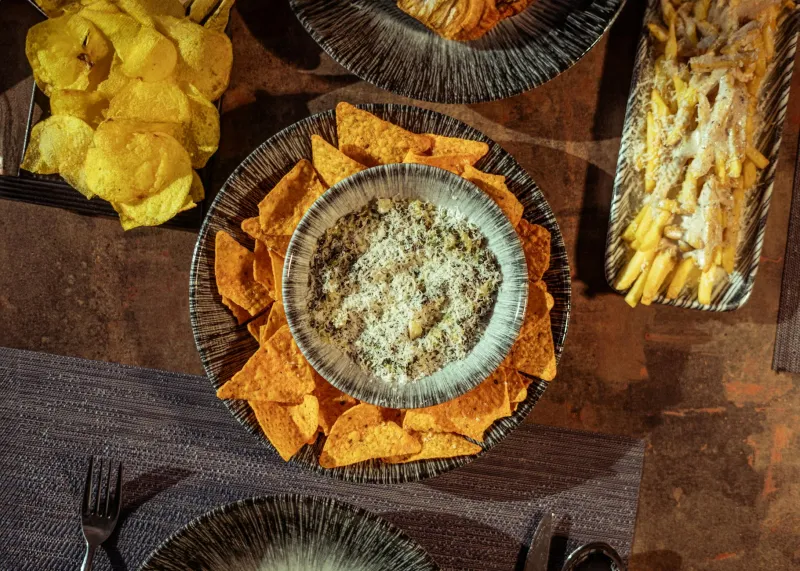
Ignacio "Nacho" Anaya was closing up his restaurant in Piedras Negras, Mexico, when a group of American military wives crossed the border looking for dinner. It was 1943, his kitchen was nearly empty, and the ladies were hungry. With only cheese, jalapeños, and stale tortilla chips on hand, Anaya threw together what he thought would be a disappointing appetizer.
 Photo: Piedras Negras, via static.wikia.nocookie.net
The women devoured the improvised dish and demanded the recipe. Word spread through the American military community, then beyond. Within a decade, "nachos especiales" had conquered Texas, then the rest of America. Today, Americans consume billions of dollars worth of nachos annually, all because one restaurant owner refused to turn away hungry customers despite having almost nothing left to serve.
The dish that started as an embarrassing last resort became a stadium staple, Super Bowl tradition, and the foundation of an entire snack food industry.
Chocolate Chip Cookies: The Mix That Wouldn't Mix
Ruth Wakefield wasn't trying to invent America's favorite cookie in 1938. The owner of the Toll House Inn in Massachusetts was simply making chocolate cookies when she realized she was out of baker's chocolate. In desperation, she chopped up a Nestlé semi-sweet chocolate bar, assuming it would melt and distribute evenly through the dough.
 Photo: Toll House Inn, via www.jec1988.com
It didn't. The chocolate pieces held their shape, creating something entirely unexpected. Wakefield almost threw out the batch, thinking she'd ruined perfectly good cookies. Instead, she served them to guests who went absolutely wild for the strange new creation.
Nestlé eventually bought the recipe from Wakefield in exchange for a lifetime supply of chocolate chips. The company printed the recipe on every package, and the "mistake" that Wakefield almost discarded became the most popular cookie in American history.
Buffalo Wings: Midnight Hunger Meets Kitchen Scraps
Teressa Bellissimo faced every restaurant owner's nightmare at the Anchor Bar in Buffalo in 1964: unexpected customers and no prepared food. Her son had arrived at midnight with a group of hungry friends, and the kitchen was essentially closed. All she had were chicken wings—typically used only for soup stock—some hot sauce, and butter.
Bellissimo deep-fried the wings, tossed them in a sauce mixture she invented on the spot, and served them with celery sticks and blue cheese dressing she grabbed from the cooler. The combination was so unexpectedly perfect that word spread throughout Buffalo, then across America.
Today, Buffalo wings are a billion-dollar industry. Every sports bar in America serves some version of Bellissimo's midnight improvisation, and Super Bowl Sunday is the biggest wing consumption day of the year.
Potato Chips: Revenge Served Crispy
George Crum never intended to create America's favorite snack. The chef at Moon's Lake House in Saratoga Springs was simply fed up with a difficult customer in 1853. Railroad magnate Cornelius Vanderbilt kept sending back his fried potatoes, complaining they were too thick and not crispy enough.
Frustrated and angry, Crum decided to teach the demanding customer a lesson. He sliced the potatoes paper-thin, fried them until they were impossible to eat with a fork, and doused them with salt. He expected Vanderbilt to storm out in disgust.
Instead, Vanderbilt loved them. Other diners demanded their own plates of "Saratoga chips." What started as passive-aggressive revenge became the foundation of a snack industry worth over $10 billion annually.
Popsicles: An Eleven-Year-Old's Forgotten Mistake
Frank Epperson was just eleven years old in 1905 when he accidentally invented one of America's most beloved treats. He'd been mixing a powdered soda drink on his family's porch in San Francisco when he got distracted and left the mixture outside overnight with the stirring stick still in it.
Temperatures dropped below freezing that night, and young Frank woke up to find his drink had frozen solid around the stick. Instead of throwing it away, he pulled it out and discovered it was delicious. He called it the "Epsicle."
Epperson forgot about his accidental invention for nearly twenty years until he served the frozen treats at a fireman's ball in 1922. The response was so enthusiastic that he patented the idea, renamed it the "Popsicle," and launched a business that would eventually sell millions of the frozen treats annually.
Fudge: When Candy Making Goes Wrong
Fudge was literally named after failure. In the 1880s, candy makers used "fudge" as slang for a batch that went wrong—when the sugar crystallized incorrectly or the temperature was off. These "fudged" batches were typically discarded or sold cheaply to workers.
But somewhere along the way, candy makers realized that these mistakes often tasted better than the intended product. The grainy, rich texture that indicated failure in traditional candy making became the goal. Women's colleges in the Northeast began making and selling "fudge" as a specialty, turning a professional embarrassment into a beloved confection.
Today, fudge shops are tourist destinations, and the candy that got its name from failure has become synonymous with indulgent success.
Ice Cream Cones: The Waffle That Saved the Day
The 1904 World's Fair in St. Louis was a disaster for ice cream vendor Arnold Fornachou. He'd run out of bowls and spoons by mid-afternoon on a swelteringly hot day, with long lines of customers waiting for his product. Nearby, Syrian waffle maker Ernest Hamwi was watching potential customers walk past his booth toward the ice cream line.
In a moment of inspiration, Hamwi began rolling his thin waffles into cone shapes and offering them to Fornachou as edible bowls. The combination was an instant hit. Customers loved being able to eat their containers, and vendors loved not having to wash dishes.
The ice cream cone became the fair's most popular innovation, spawning an entire industry and changing how Americans consumed frozen treats forever.
The Beautiful Chaos of American Innovation
These accidental masterpieces share a common thread: they emerged from moments when conventional wisdom failed and improvisation took over. None of these dishes would have passed a modern focus group or market research test. They were born from desperation, mistakes, and the willingness to serve something imperfect rather than nothing at all.
Perhaps that's what makes them so enduringly American—they represent the spirit of making do, of turning limitations into opportunities, of finding success in the spaces between what was planned and what actually happened. The best American foods weren't designed; they were discovered in moments when everything went wrong but somehow went right.
In a culture obsessed with perfection and planning, these chaotic origin stories remind us that sometimes the most lasting innovations come from embracing the unexpected rather than avoiding it.