The Man With Grease on His Hands Who Quietly Steered a Presidential Campaign
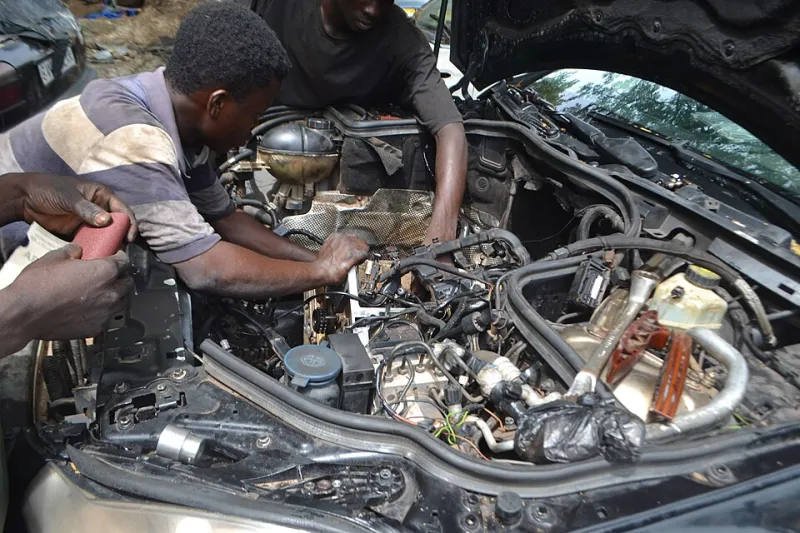
Photo: Kwamitsey, CC BY 4.0, via Wikimedia Commons
The Room Nobody Guarded
The most important room in any campaign isn't the one with the teleprompters. It's the one nobody photographs — the back hallway where the buses get patched, the schedules get taped together, and the people with no credentials quietly decide whether the whole operation lives or dies.
American political history loves its orators and its strategists. It has almost no patience for the fixers. And that's a shame, because if you pull the thread on some of the biggest political turnarounds of the last century, you keep finding the same kind of person: someone who wandered in through the service door.
No Credentials, No Plan, No Problem
Consider the archetype — because the pattern repeats more often than the textbooks admit. In campaign after campaign, the person who saved the operation wasn't the consultant with the Ivy League degree. It was the advance man who used to drive a delivery truck. The scheduler who learned logistics loading freight. The mechanic who understood that a candidate's fate often came down to whether a bus engine turned over at 4 a.m. in rural Ohio.
These were people who took a wrong turn into politics — literally, in some cases, showing up at the wrong headquarters for a job interview and getting hired on the spot because the campaign was desperate and they were standing there.
What they lacked in pedigree, they made up for in something the strategists couldn't teach: they knew how the country actually worked. They knew which county roads flooded in October. They knew that a diner crowd at 6 a.m. would tell you more than any focus group. They knew that when the candidate's plane was grounded in Nebraska, the difference between a disaster and a footnote was one phone call to a guy who knew a guy.
Why the Fixers Vanish From the Record
Here's the uncomfortable part: history doesn't just overlook these people. It actively erases them.
Campaigns are remembered by their speeches and their margins of victory. The memoirs get written by the advisors. The documentaries interview the press secretaries. The person who kept forty buses running through a snowstorm? That's a line item in an expense report, filed and forgotten.
There's a reason for it, too. A campaign's official story is a story about vision and ideas. Admitting that the whole enterprise nearly collapsed because of a fuel routing error undercuts the mythology. So the grease-stained hands get photoshopped out of the picture.
But talk to the old advance teams — the ones who worked the whistle-stop trains and the 1970s bus tours — and they'll tell you the same thing: elections were lost over logistics. And the ones that were won? Somebody uncredited held them together with baling wire and stubbornness.
The Wrong Room Can Be the Right Room
There's a lesson in this for anyone who feels like they don't belong in the career they've stumbled into. The people who end up steering the ship often got there by accident. They took the wrong job. They moved to the wrong city. They answered the wrong ad.
And then they did the one thing that mattered: they paid attention. They learned how the machine worked from the inside, not the org chart. The consultant reads the polling memo; the fixer has already counted the chairs in the venue and knows you need twenty more.
That's not a footnote to political history. That is political history — just the version nobody prints.
Look Behind the Curtain
The next time you watch a victory speech, think about the chain of small, invisible decisions that got the candidate to that podium. Somewhere in that chain is a person with no title, working off the books, making it all possible.
They didn't follow the map. Most of them never even had one. And the country is shaped by their wrong turns more than we'll ever know.