Seven Legendary Restaurants That Started in the Most Unlikely Places
1. White Castle: The Parking Lot That Changed Everything
In 1921, Walter Anderson was cooking hamburgers on a makeshift grill in a Wichita parking lot when Billy Ingram walked up and changed American food forever. Anderson had been experimenting with a new concept: thin beef patties cooked quickly on a flat grill, served on small buns that customers could eat with one hand.
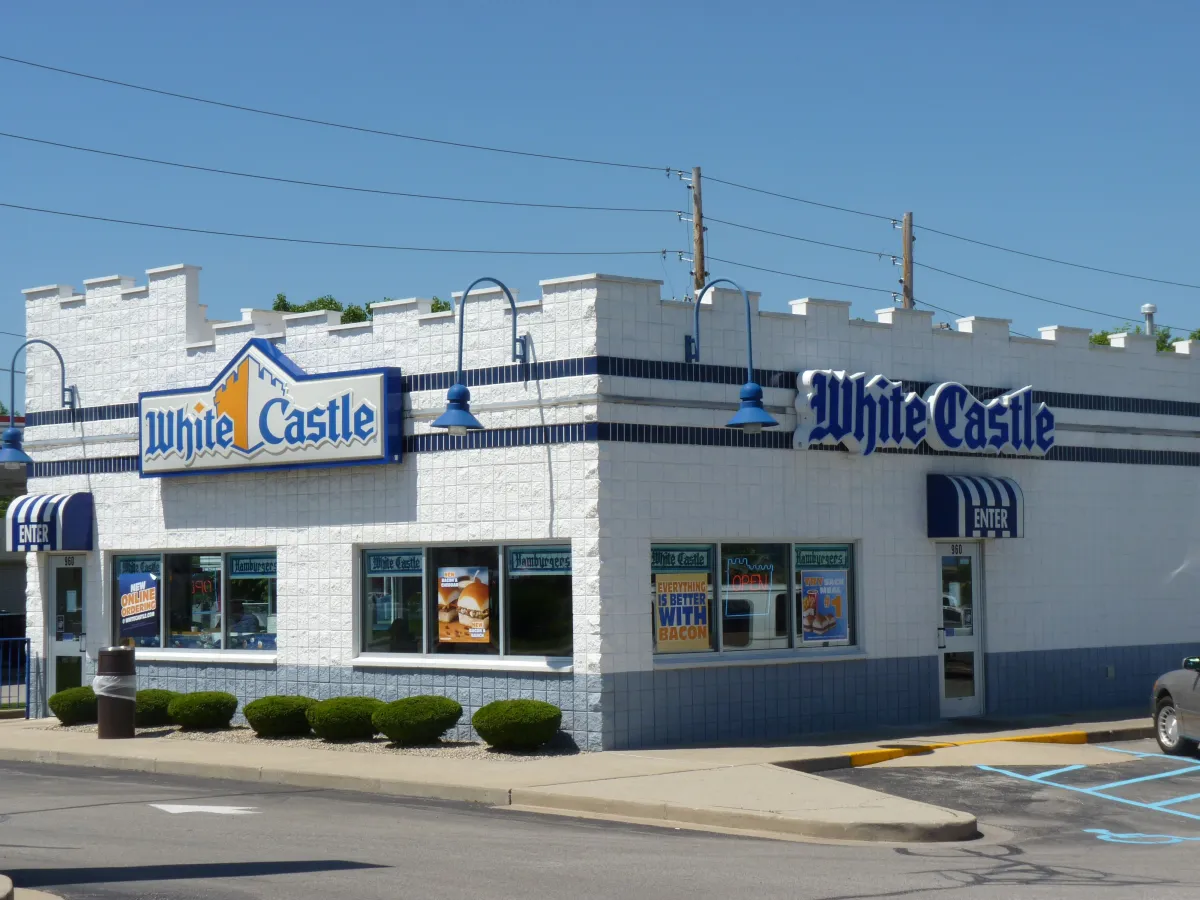 Photo: White Castle, via i.pinimg.com
Most people thought Anderson was crazy. Hamburgers were considered carnival food — cheap, greasy, and definitely not respectable. But Ingram saw something different. He convinced Anderson to partner with him, and together they opened the first White Castle in a converted streetcar.
Their innovation wasn't just the food; it was the system. They created the first fast-food chain by standardizing everything: the cooking process, the restaurant design, even the size of the hamburger patties. What started as a guy with a grill in a parking lot became the template for an industry worth billions.
Anderson's parking lot experiment proved that sometimes the best ideas come from the places where nobody expects to find them.
2. Chez Panisse: From Commune Kitchen to Culinary Revolution
Alice Waters never intended to start a restaurant. In 1971, she was a Berkeley graduate student living in a communal house, cooking meals for friends who shared her passion for fresh, local ingredients. The "restaurant" began as an extension of those dinner parties — a way to keep the conversation and the cooking going.
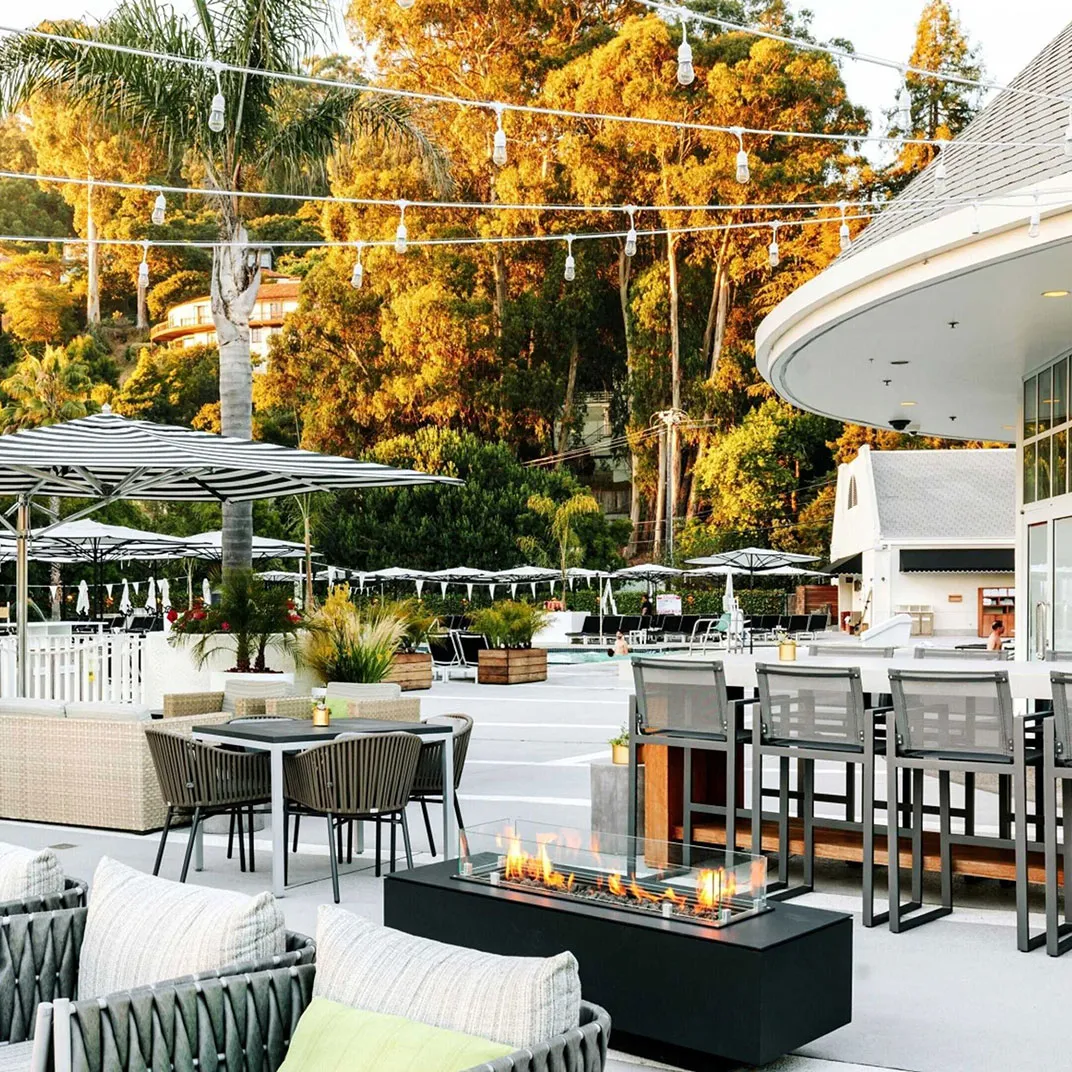 Photo: Chez Panisse, via static.prod.r53.tablethotels.com
Waters' approach was revolutionary precisely because it seemed so simple. At a time when American restaurants were embracing processed foods and elaborate presentations, she served whatever was fresh from local farms, prepared simply and served on mismatched plates.
Critics initially dismissed Chez Panisse as hippie nonsense. The menu changed daily based on what was available, the service was casual to the point of chaos, and Waters had no formal culinary training. But her "wrong" approach to running a restaurant ended up launching the farm-to-table movement that now dominates American dining.
What started as a commune kitchen became the birthplace of California cuisine and one of the most influential restaurants in American history.
3. Edna Lewis's Café Nicholson: The Freight Elevator Restaurant
In 1949, Edna Lewis was working as a seamstress in New York City when a friend asked her to help with a struggling restaurant in a basement space accessed only by freight elevator. The location was so unpromising that most chefs wouldn't even look at it.
But Lewis saw possibility where others saw problems. She transformed Café Nicholson into a showcase for the Southern cooking she had learned growing up in Virginia — food that most New Yorkers had never experienced prepared with such care and sophistication.
The freight elevator became part of the restaurant's charm. Diners felt like they were being let in on a secret, descending to a hidden world where Lewis served dishes like perfectly fried chicken and biscuits that seemed to float on air.
Within months, Café Nicholson had become the most sought-after reservation in Manhattan. Writers, artists, and celebrities crowded into the basement space, riding that freight elevator to experience Lewis's revolutionary approach to American cooking.
Lewis proved that great food could elevate any space — even one you had to reach by freight elevator.
4. Dooky Chase's: The Beauty Shop That Fed a Movement
Leah Chase didn't set out to run a restaurant either. In 1946, she married Edgar "Dooky" Chase Jr., whose family owned a small sandwich shop in a New Orleans neighborhood where Black families couldn't eat in most restaurants.
The original Dooky Chase's was tiny — literally a converted beauty shop with a few tables squeezed between the shampoo sinks. But Chase had bigger dreams. She gradually expanded the space and elevated the menu, serving refined Creole cuisine at a time when most people expected "Negro restaurants" to serve only simple comfort food.
By the 1960s, Dooky Chase's had become the unofficial headquarters of the civil rights movement in New Orleans. The restaurant was one of the few places where Black and white activists could meet safely, and Chase fed everyone from local organizers to national leaders like Martin Luther King Jr.
The beauty shop that became a restaurant had also become a symbol of dignity, resistance, and the power of good food to bring people together across racial divides.
5. Commander's Palace: The Bordello That Became a Palace
In 1880, Emile Commander opened his restaurant in a Victorian mansion in New Orleans' Garden District. There was just one problem: the building had previously housed one of the city's most notorious brothels.
Respectable families wouldn't be caught dead in the old bordello, no matter how good the food was. Commander struggled for years to overcome the building's reputation, serving excellent Creole cuisine to mostly empty dining rooms.
But Commander understood something about New Orleans: the city loved a good redemption story. He embraced the building's scandalous past while transforming it into something completely different. The former bordello became a temple to respectable dining, complete with white tablecloths and impeccable service.
Today, Commander's Palace is one of America's most celebrated restaurants, a James Beard Award winner that has launched the careers of dozens of famous chefs. The bordello that nobody wanted to enter became the restaurant where everyone wants a reservation.
6. Franklin Barbecue: The Food Truck That Conquered Austin
In 2009, Aaron Franklin was unemployed and desperate when he bought a used food trailer and parked it in an Austin lot next to a tire shop. He had no restaurant experience, no business plan, and no idea what he was doing.
What Franklin did have was an obsession with barbecue and a willingness to work eighteen-hour days perfecting his craft. He'd arrive at 4 AM to start his fires, spend the day tending brisket, and often sell out before the dinner rush even began.
The tire shop location seemed like a disaster — no foot traffic, no visibility, nowhere for customers to sit. But Franklin's barbecue was so extraordinary that people didn't care about the setting. Lines began forming at dawn, and food critics started making pilgrimages to the parking lot.
Within five years, Franklin had moved to a proper restaurant and earned a James Beard Award. But it all started with a guy and a trailer next to a tire shop, proving that in barbecue, location matters less than dedication.
7. Zuni Café: The Hurricane's Gift
In 1979, Judy Rodgers was a young chef looking for her first restaurant when Hurricane Agnes devastated a San Francisco neighborhood, leaving a small café damaged and abandoned. The insurance settlement wasn't enough to fully repair the space, so Rodgers took over the lease and opened Zuni Café with mismatched furniture and a kitchen held together with determination.
The storm damage that had driven away the previous owner became Zuni's signature aesthetic. The exposed brick, the slightly crooked floors, the windows that didn't quite fit their frames — all of it created an atmosphere of casual sophistication that couldn't have been designed.
Rodgers built her menu around a wood-fired oven that had survived the hurricane, developing techniques for roasting chicken and baking bread that would influence a generation of American chefs. What started as making do with storm damage became a revolutionary approach to cooking.
Zuni Café became one of San Francisco's most beloved restaurants, proving that sometimes the best opportunities come disguised as disasters.
The Geography of Dreams
These seven restaurants share something beyond their unlikely origins: they all succeeded because their founders understood that great food could transform any space. Whether it was a parking lot, a basement, or a hurricane-damaged café, each location became legendary not despite its limitations, but because of how creative people worked within them.
In American food culture, the wrong address has often turned out to be exactly the right beginning. These restaurants remind us that success isn't about finding the perfect location — it's about making whatever location you have perfect for your vision.