When Wrong Went Right: Seven American Inventors Whose Greatest Mistakes Became Everyday Miracles
When Failure Becomes Fortune
American innovation has a dirty secret: some of our most life-changing inventions were never supposed to happen. While we celebrate the genius of inventors, we often overlook the role of pure accident in creating the products that define modern life. These seven stories prove that sometimes the best discoveries come from the worst mistakes.
1. Charles Goodyear: The Rubber That Refused to Quit
Charles Goodyear spent five years trying to make rubber useful, and five years failing spectacularly. Raw rubber melted in summer heat and cracked in winter cold. Investors lost fortunes. Goodyear's family lived in poverty while he obsessed over his impossible dream.
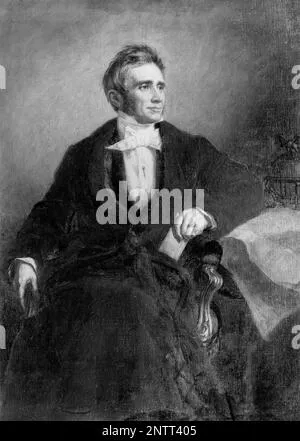 Photo: Charles Goodyear, via l450v.alamy.com
Then, in 1839, disaster struck in the most fortunate way possible. Goodyear accidentally dropped a mixture of rubber, sulfur, and lead onto a hot stove. Instead of melting into useless goo, the rubber charred around the edges but remained flexible in the center. He had discovered vulcanization—the process that makes rubber stable at any temperature.
That accident created an industry worth billions today. Car tires, medical devices, industrial equipment—all depend on Goodyear's fortunate fumble. The man who couldn't make rubber work correctly ended up making it work perfectly.
2. Percy Spencer: The Candy Bar That Cooked Itself
Percy Spencer was testing military radar equipment in 1945 when he noticed something odd: the chocolate bar in his pocket had melted. Most engineers would have cursed the ruined candy and moved on. Spencer saw an opportunity.
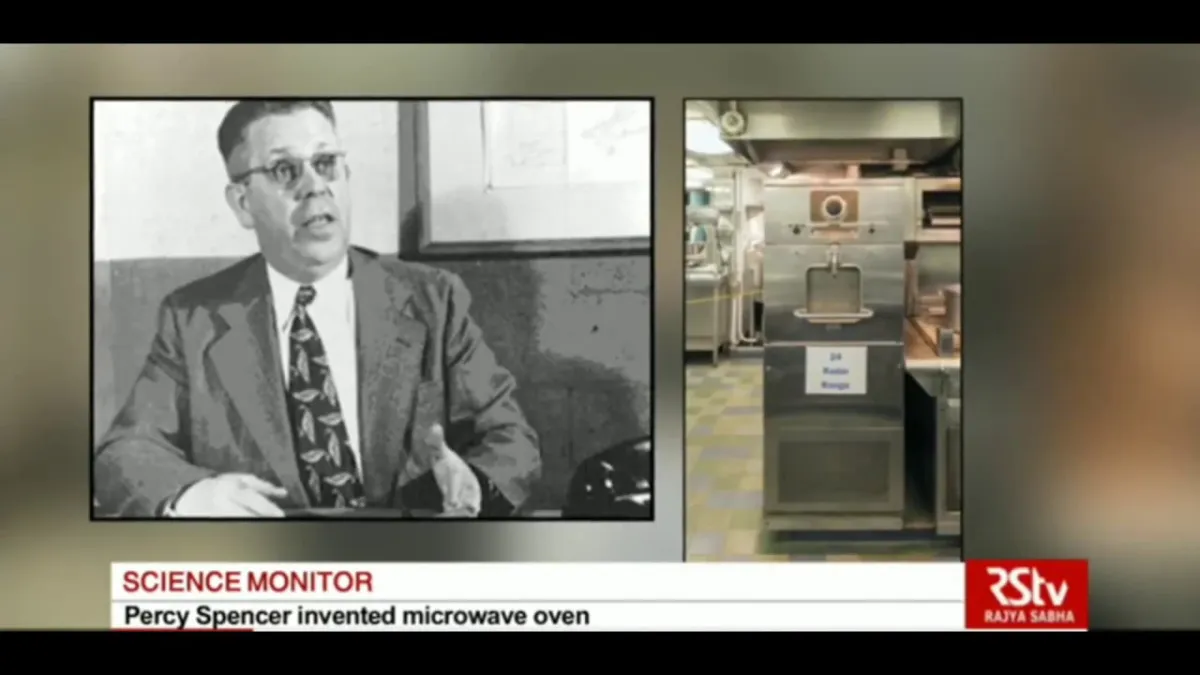 Photo: Percy Spencer, via i.ytimg.com
He began experimenting with the magnetron tubes that powered radar systems, discovering they could cook food faster than any conventional oven. Popcorn kernels exploded in seconds. Eggs cooked from the inside out. Spencer had stumbled onto microwave cooking while trying to perfect radar technology.
Raytheon, his employer, initially couldn't figure out how to market Spencer's discovery. The first microwave ovens were six feet tall and cost $5,000—more than most cars. But Spencer's accidental insight eventually revolutionized how Americans prepare food, turning cooking from a lengthy process into a matter of minutes.
3. Roy Plunkett: The Slippery Slope to Success
DuPont chemist Roy Plunkett was trying to create a new refrigerant in 1938 when his experiment went completely wrong. The gas he was working with polymerized overnight, creating a white, waxy substance that stuck to nothing and couldn't be dissolved by any known chemical.
Plunkett's "failed" refrigerant became Teflon—the slipperiest substance on Earth. Initially used in atomic bomb production during World War II, Teflon later revolutionized cooking, manufacturing, and countless other industries. The experiment that ruined Plunkett's refrigerant research created a material that would become essential to modern life.
Today, Teflon appears in everything from frying pans to spacecraft. Plunkett's willingness to investigate his "failure" instead of throwing it away transformed a laboratory accident into a multi-billion-dollar innovation.
4. Wilson Greatbatch: The Heartbeat That Wouldn't Stop
In 1956, Wilson Greatbatch was building a heart rhythm recording device when he grabbed the wrong resistor from his parts box. The circuit he built oscillated at exactly 60 beats per minute—useless for recording heartbeats, but perfect for creating them.
Greatbatch realized he had accidentally built the world's first practical pacemaker. His mistake became a medical breakthrough that has saved millions of lives. The wrong component led to the right invention, transforming cardiology and giving hope to patients with irregular heartbeats.
The device Greatbatch never meant to build became one of medicine's most important innovations. His accidental pacemaker proved that sometimes the most valuable discoveries come from reaching for the wrong tool at exactly the right moment.
5. Frank Epperson: The Forgotten Drink That Froze History
Eleven-year-old Frank Epperson left a cup of powdered soda mix and water on his porch one cold San Francisco night in 1905. When he found it the next morning, the drink had frozen solid around the stirring stick. Most kids would have thrown away the frozen mess. Epperson tasted it instead.
 Photo: San Francisco, via farm5.staticflickr.com
Twenty years later, Epperson remembered his childhood accident and began selling "Epsicles" at a local amusement park. The frozen treats were an instant hit, but Epperson's children had a better name for them: "popsicles," since dad had made them.
Epperson's forgetfulness created an entire industry. Popsicles became an American summer tradition, spawning countless variations and competitors. The boy who left his drink outside accidentally invented one of America's most beloved treats.
6. Art Fry: The Bookmark That Stuck Around
Art Fry was frustrated. The bookmarks in his hymnal kept falling out during choir practice at his Minnesota church. Meanwhile, his colleague Spencer Silver at 3M had created an adhesive that was considered a complete failure—it was too weak to bond permanently but too strong to ignore completely.
Fry realized Silver's "failed" glue was perfect for removable bookmarks. He began experimenting with small pieces of paper coated with the weak adhesive. The result was Post-it Notes—one of 3M's most successful products.
The combination of Fry's practical problem and Silver's imperfect solution created a product that redefined how people organize information. Today, Post-it Notes are ubiquitous in offices, homes, and schools worldwide.
7. John Pemberton: The Medicine That Became a Movement
Atlanta pharmacist John Pemberton was trying to create a headache remedy in 1886 when he accidentally carbonated his medicinal syrup. The resulting beverage tasted nothing like medicine—and everything like the future of American soft drinks.
Pemberton's assistant suggested they sell the accidental soda as a refreshing beverage rather than a headache cure. They named it Coca-Cola, after two of its original ingredients. Pemberton's medical mistake became the foundation of one of the world's most valuable brands.
The pharmacist who couldn't perfect his headache remedy instead created a drink that would become synonymous with American culture and spread to every corner of the globe.
The Beautiful Accident of Innovation
These seven inventors share a crucial trait: they paid attention to their failures. When experiments went wrong, they didn't just clean up and start over—they investigated why things had gone wrong and whether the "wrong" result might actually be useful.
Their stories remind us that innovation isn't always about having the right answer. Sometimes it's about recognizing when the wrong answer is actually better than what you were looking for in the first place.
In American innovation, the most transformative discoveries often begin with the words "That's not supposed to happen." The question isn't whether we'll make mistakes—it's whether we'll be smart enough to learn from them.