The Woman Who Couldn't Compose Music but Taught America How to Hear It

Nadia Boulanger spent her early twenties convinced she was destined to be one of France's great composers. She had the musical pedigree – her father was a composer, her mother a singer – and the formal training from the Paris Conservatory. But by 1918, after years of rejections and lukewarm reviews, she made a decision that would accidentally reshape American music: she gave up composing entirely.
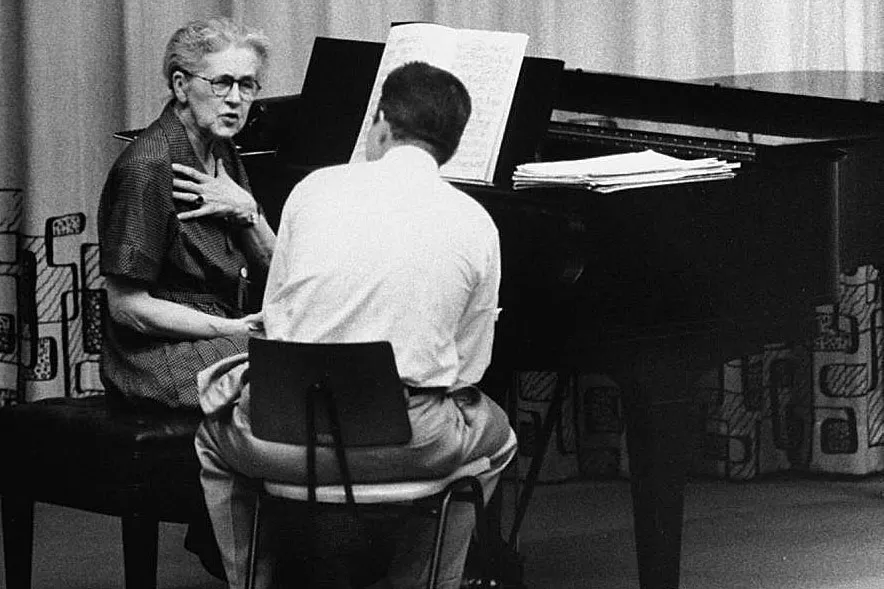 Photo: Nadia Boulanger, via cdm.link
It was the best failure in the history of American culture.
The Composer Who Couldn't
Boulanger's early attempts at composition followed all the rules. She wrote in the accepted French style, submitted her work to the proper competitions, and waited for recognition that never came. Her pieces were technically proficient but lacked the spark that separated competent music from transcendent art.
The final blow came when her younger sister Lili began showing the compositional genius that Nadia had always hoped to possess. Lili's music was innovative, emotionally powerful, and immediately recognized by critics and fellow composers. Watching her sister succeed where she had failed, Nadia faced an uncomfortable truth: she wasn't going to be the composer she'd dreamed of becoming.
Instead of wallowing in disappointment, Boulanger made a radical pivot. If she couldn't create great music, perhaps she could teach others to do it.
The Accidental Pedagogue
Boulanger's entry into teaching was pragmatic rather than passionate. She needed income, and her musical knowledge made tutoring a logical choice. But what started as a necessity quickly revealed an unexpected gift: she could hear potential in other people's music that they couldn't hear themselves.
Her teaching method was unlike anything in the formal conservatory system. Rather than imposing rigid rules, she listened to what each student was trying to express and helped them find the techniques to express it more clearly. She taught composition not as a set of formulas but as a conversation between the composer's intentions and the listener's experience.
The American Invasion
After World War I, young American musicians began arriving in Paris seeking the sophistication they felt was missing from American musical culture. Many found their way to Boulanger's studio, drawn by word-of-mouth recommendations from other students.
What they discovered was a teacher who took American musical instincts seriously. While European instructors often tried to make American students sound more European, Boulanger encouraged them to develop their distinctly American voices. She heard value in jazz rhythms, folk melodies, and the democratic spirit that American composers brought to their work.
Aaron Copland was among her first American students, arriving in 1921 with ambitious plans and limited technique. Under Boulanger's guidance, he developed the distinctly American classical style that would make him famous. She didn't teach him to copy European models; she taught him to trust his own musical instincts while giving him the technical skills to express them clearly.
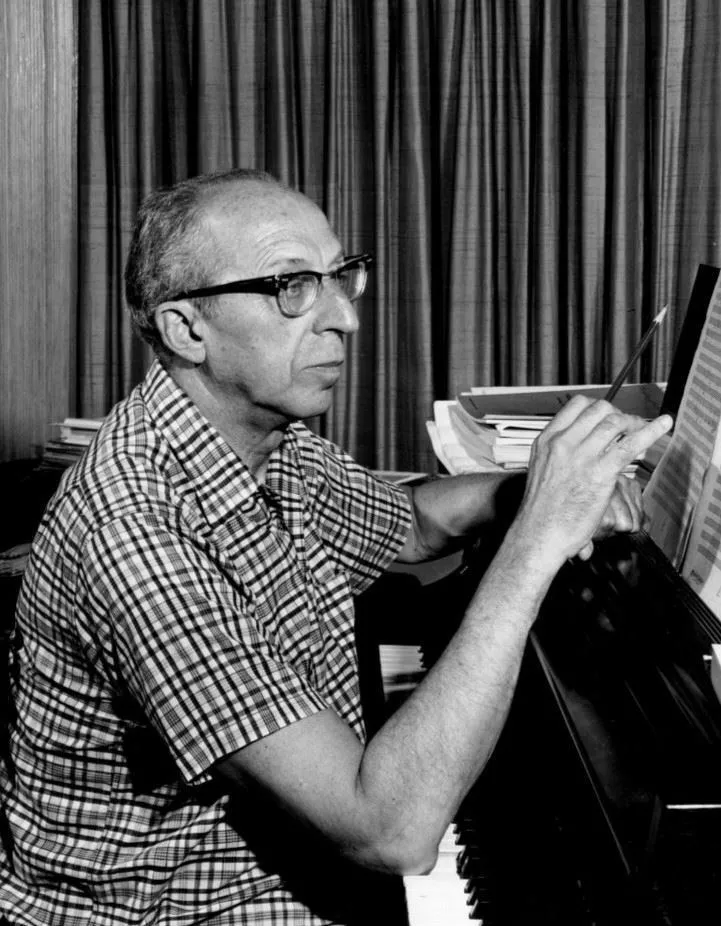 Photo: Aaron Copland, via myhero.com
The Factory of Genius
Word spread quickly through American musical circles: there was a teacher in Paris who could unlock something in American composers that no one else could access. Students began making pilgrimages to her studio, and what they found was a musical laboratory unlike anywhere else in the world.
Boulanger's studio became a meeting place where American composers encountered each other and discovered they were part of a larger movement. Leonard Bernstein studied with her. So did Virgil Thomson, Roy Harris, and dozens of others who would define American classical music for the rest of the century.
 Photo: Leonard Bernstein, via static.wixstatic.com
Her influence extended beyond classical composition. She taught musicians who would go on to work in Hollywood, Broadway, and jazz. The techniques she developed for helping composers find their authentic voices worked regardless of the musical genre they ultimately pursued.
The Method Behind the Magic
Boulanger's teaching success stemmed from an approach that was radical for its time: she treated each student as an individual artist rather than a vessel to be filled with predetermined knowledge. She studied each composer's natural tendencies and helped them develop those tendencies into sophisticated techniques.
She was also brutally honest about what worked and what didn't. Students learned to trust her ear because she could immediately identify when they were writing authentically and when they were copying someone else's style. Her criticism was precise and constructive, focused on helping composers achieve their own goals rather than conforming to external standards.
Most importantly, she taught her students to listen – not just to their own music, but to the musical conversations happening around them. American composers learned to hear how their work related to both European traditions and emerging American forms.
The Ripple Effect
By the 1940s, Boulanger's influence on American music was undeniable. Her students were winning major commissions, conducting major orchestras, and teaching the next generation of American composers. The musical language they developed – sophisticated but accessible, rooted in American experience but technically accomplished – became the sound of 20th-century American culture.
Her impact extended far beyond her direct students. The composers she taught went on to become teachers themselves, spreading her methods and philosophy throughout American musical education. Conservatories began adopting her approach to individual artistic development rather than rigid conformity to European models.
The Teacher's Paradox
Boulanger's story illustrates one of the most interesting paradoxes in creative fields: sometimes the people who can't do something exceptionally well are the best at teaching others to do it. Her failure as a composer freed her from the ego investment that might have made her impose her own style on students.
Instead, she became a musical translator, helping American composers understand their own instincts and giving them the technical vocabulary to express those instincts clearly. She succeeded as a teacher precisely because she had failed as a composer.
The Sound of America
By the time Boulanger died in 1979, American classical music had found its voice, and that voice bore her unmistakable influence. The composers she taught had created a musical language that was unmistakably American but sophisticated enough to command international respect.
More importantly, she had established a model for how American artists could develop authentic voices without rejecting the technical traditions that came before them. Her students learned to be both innovative and grounded, experimental and accessible.
The Legacy of Listening
Nadia Boulanger's greatest achievement wasn't any single piece of music or any individual student's success. It was her demonstration that teaching itself could be a creative act, that helping others find their voices could be as important as finding your own.
Her story reminds us that sometimes the most important contributions come from people who were headed in completely different directions. Boulanger set out to be a composer and ended up being something more valuable: the person who taught America how to compose itself.
In the end, her failure to create music became her success at creating musicians. Sometimes the wrong path turns out to be exactly the right one.