Thirty-Three Years of Midnight Architecture: The Postman Who Built Dreams Into Stone
The Daily Route That Changed Everything
Every morning for thirty-three years, Ferdinand Cheval laced up his boots and walked the same twenty-mile postal route through the French countryside. To most observers, he was just another government employee trudging through his duties. But Cheval saw something different in those dusty paths—he saw building materials scattered everywhere, waiting for someone crazy enough to pick them up.
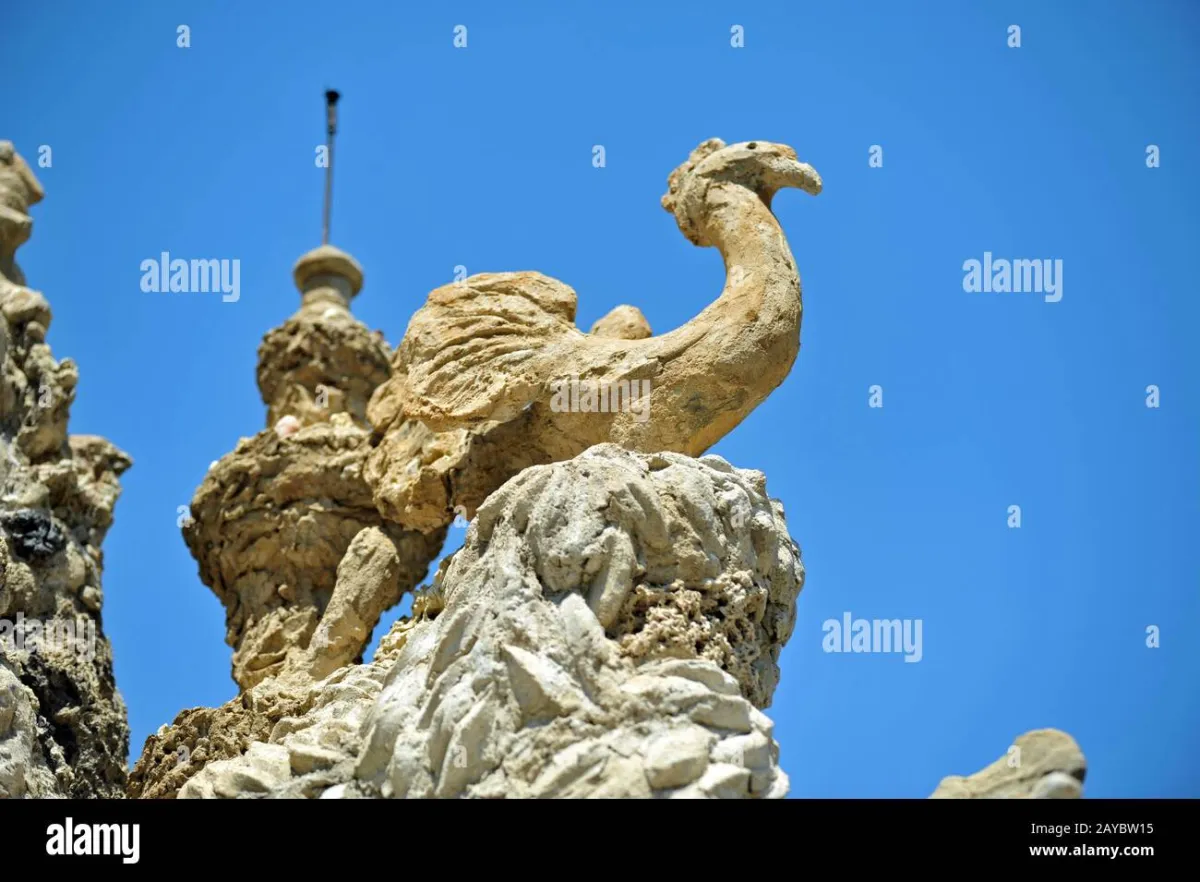 Photo: Ferdinand Cheval, via c8.alamy.com
What started as an idle hobby became an obsession that would inspire generations of American self-taught builders and visionary artists. Cheval's story proves that the most extraordinary achievements often begin with the most ordinary circumstances.
When a Stumble Becomes a Calling
In 1879, Cheval tripped over an unusually shaped stone during his daily rounds. Most people would have cursed and kept walking. Instead, Cheval examined the rock closely, turning it over in his hands and imagining what it might become. That single moment of curiosity sparked a three-decade project that would transform his backyard into one of the world's most remarkable architectural achievements.
Cheval had no training in construction, no formal education in art, and no wealthy patrons funding his vision. What he had was time—those long hours after his postal duties ended—and an unshakeable belief that ordinary people could create extraordinary things.
Building a Palace One Stone at a Time
Night after night, Cheval worked by lamplight in his garden, carefully placing each stone he'd collected during his mail deliveries. Neighbors thought he'd lost his mind. Local officials questioned his sanity. But Cheval kept building, guided by an internal vision that no architectural school could have taught him.
His "Ideal Palace" defied every convention of traditional construction. Towers twisted skyward without structural logic. Caves opened into unexpected chambers. Sculptures emerged from walls like fever dreams made manifest. The entire structure looked like something a child might imagine after reading too many fairy tales—which was exactly the point.
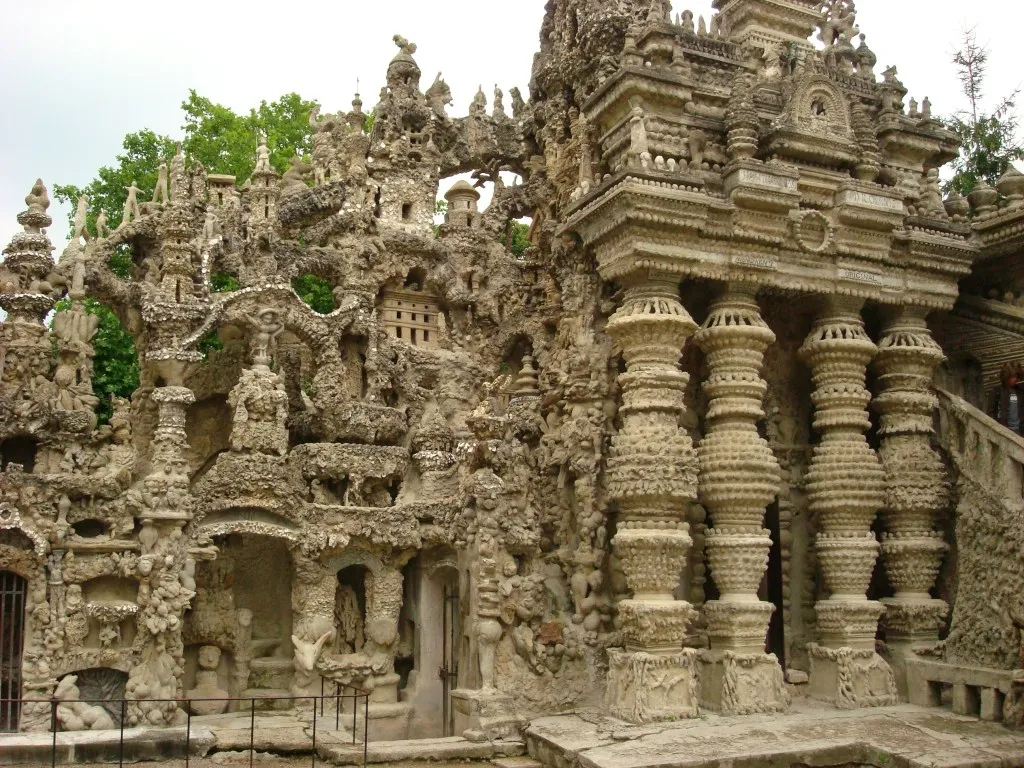 Photo: Ideal Palace, via i0.wp.com
Cheval wasn't trying to impress critics or follow established rules. He was building pure imagination into physical form, creating a space where wonder mattered more than engineering principles.
The American Echo
Cheval's story crossed the Atlantic and took root in American soil, inspiring a generation of self-taught builders who refused to accept that great architecture required formal training. From Simon Rodia's Watts Towers in Los Angeles to Howard Finster's Paradise Garden in Georgia, American outsider artists found permission in Cheval's example to build their own impossible dreams.
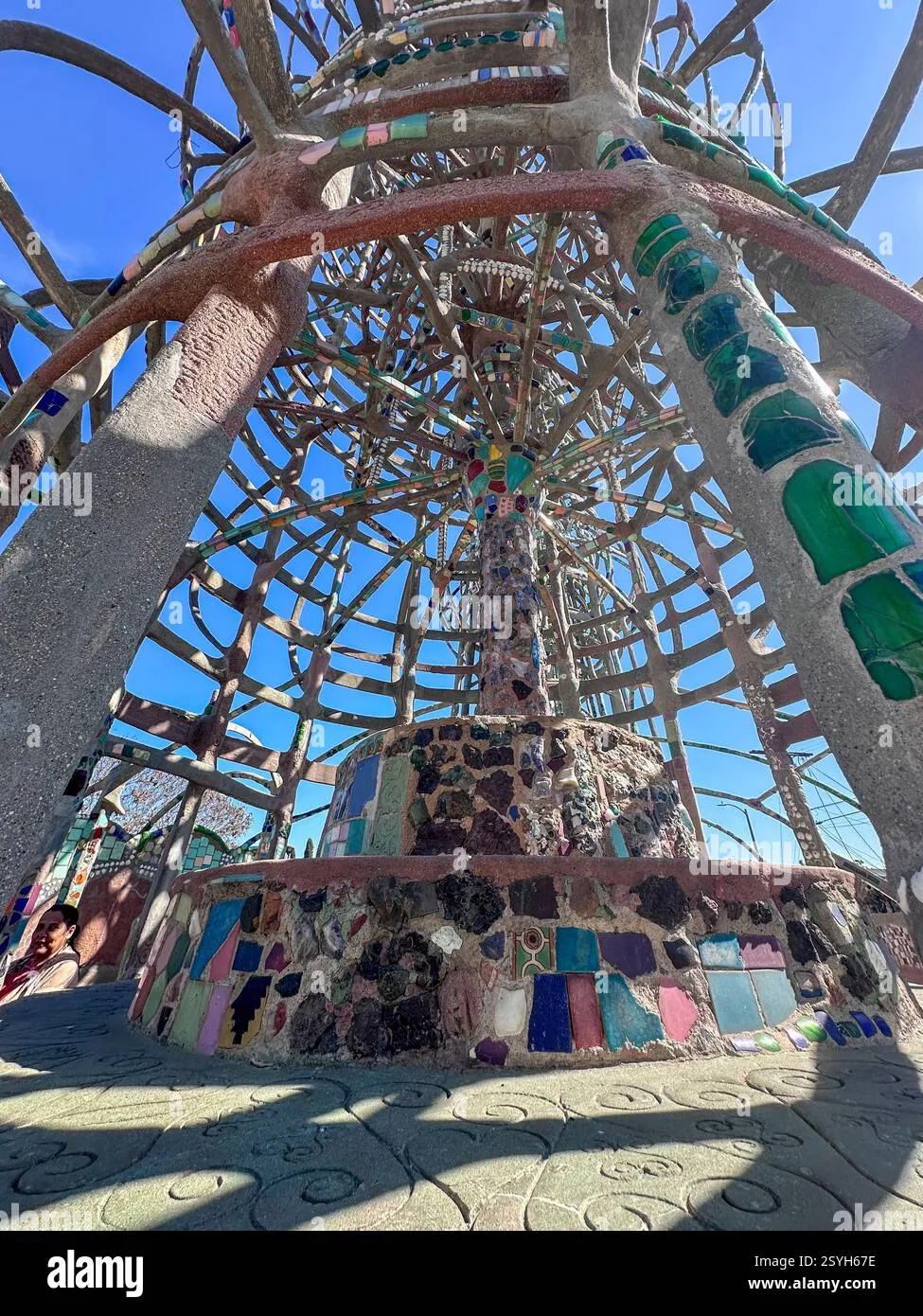 Photo: Watts Towers, via c8.alamy.com
These creators shared Cheval's understanding that the most authentic art comes from personal vision rather than institutional approval. They proved that America's greatest monuments aren't always the ones commissioned by committees or designed by famous architects.
The Persistence of Vision
What makes Cheval's story particularly American in spirit is his refusal to quit when others questioned his judgment. For thirty-three years, he faced ridicule from neighbors, skepticism from officials, and the constant challenge of working alone on an impossibly ambitious project.
Yet he never stopped collecting stones during his postal rounds. Never stopped working by lamplight after dinner. Never stopped believing that his vision deserved to exist in the world, regardless of what others thought.
Legacy in Stone and Spirit
Today, Cheval's Ideal Palace attracts thousands of visitors annually and stands as a UNESCO World Heritage site. But its true legacy lives in the countless Americans who've found inspiration in his story—ordinary people who've decided that their visions matter enough to build, regardless of training, approval, or conventional wisdom.
Cheval proved that masterpieces don't require prestigious commissions or expensive materials. Sometimes they just need someone willing to pick up stones day after day, year after year, until imagination becomes reality.
His postal route ended long ago, but the path he carved between dreaming and doing remains open for anyone bold enough to follow it. In America, where self-made success stories form the national mythology, Ferdinand Cheval's midnight architecture continues to remind us that the greatest buildings often rise from the most unlikely builders.