Failure Was Just the Beginning: How Buckminster Fuller Turned Academic Disaster Into Architectural Revolution
The Man Who Failed Upward
In 1913, a young Buckminster Fuller stood outside Harvard University's administration building, officially expelled for the second time. His crimes? Spending his tuition money on parties for chorus girls and showing a complete disregard for academic convention. At 18, Fuller seemed to embody everything a successful person shouldn't be: undisciplined, unfocused, and utterly incapable of following rules.
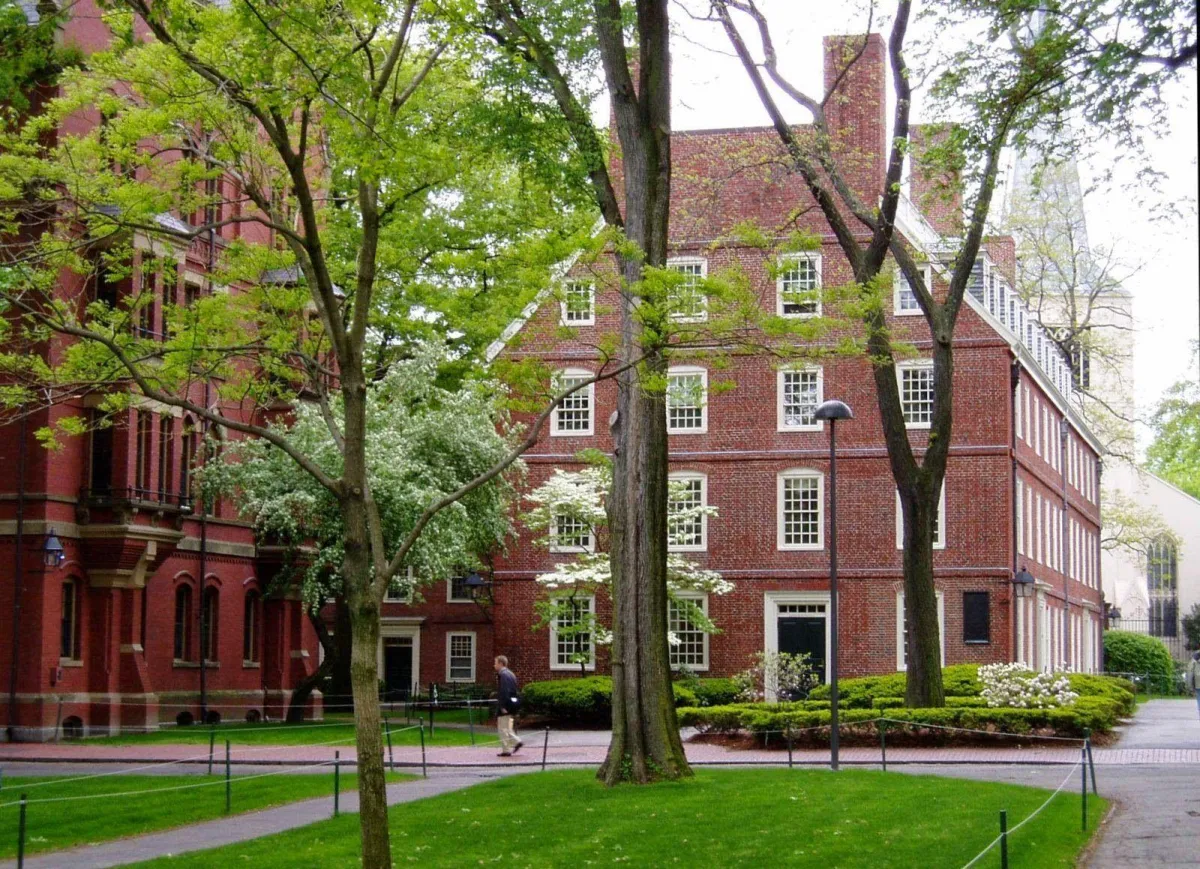 Photo: Harvard University, via wallpapercave.com
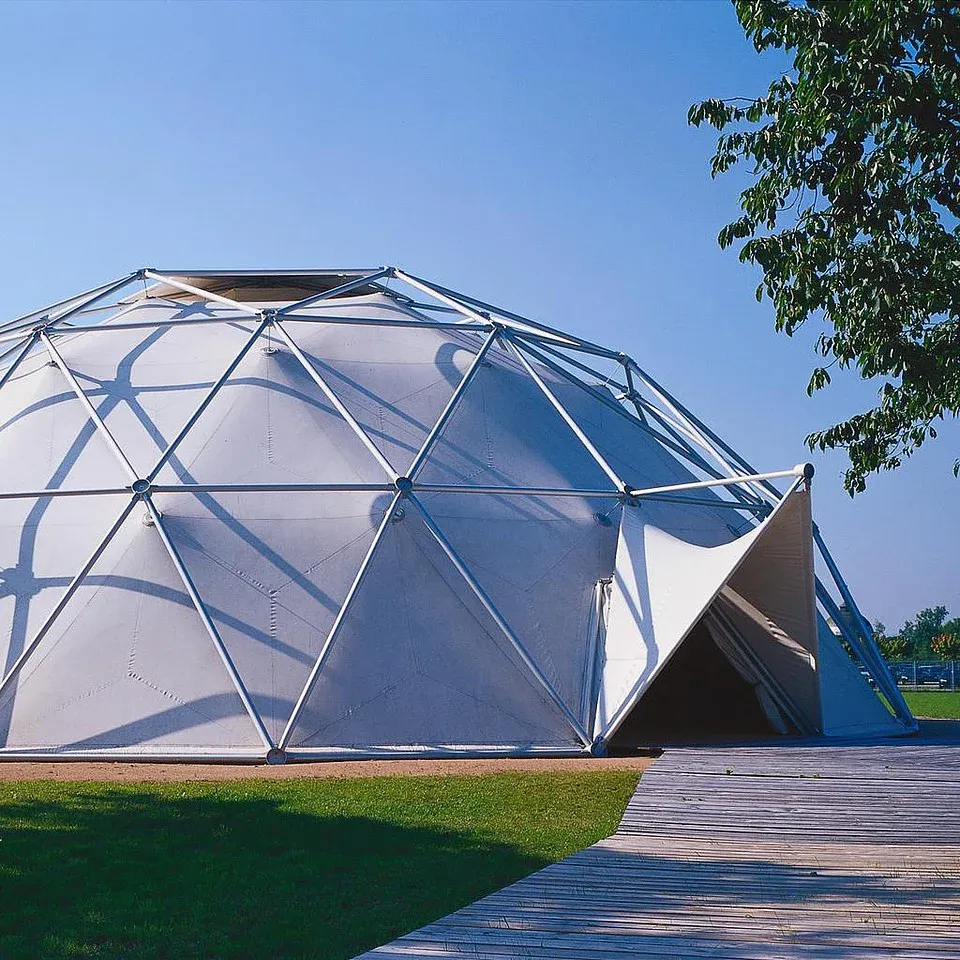 Photo: Buckminster Fuller, via i.pinimg.com
Yet this same man would go on to revolutionize architecture, pioneer sustainable design, and coin terms like "Spaceship Earth" that still shape how we think about our planet. Fuller's story isn't just about overcoming failure—it's about how the very qualities that made him a terrible student made him an extraordinary innovator.
When Life Becomes the Laboratory
After his second expulsion, Fuller drifted through a series of jobs: mill worker, meat packer, sailor. His family, prominent New England intellectuals, watched with mounting concern as their black sheep bounced from one failure to another. By his early thirties, Fuller was broke, unemployed, and contemplating suicide.
But in 1927, standing on the shores of Lake Michigan, Fuller made a decision that would change everything. Instead of ending his life, he would treat it as an experiment. "What could one individual do to benefit all humanity?" he asked himself. It was a question that would drive him for the next sixty years.
 Photo: Lake Michigan, via d25g0eo9v926iy.cloudfront.net
This moment of desperation became Fuller's greatest breakthrough—not a technical innovation, but a philosophical one. He stopped trying to fit into existing systems and started imagining entirely new ones.
The Dome That Defied Logic
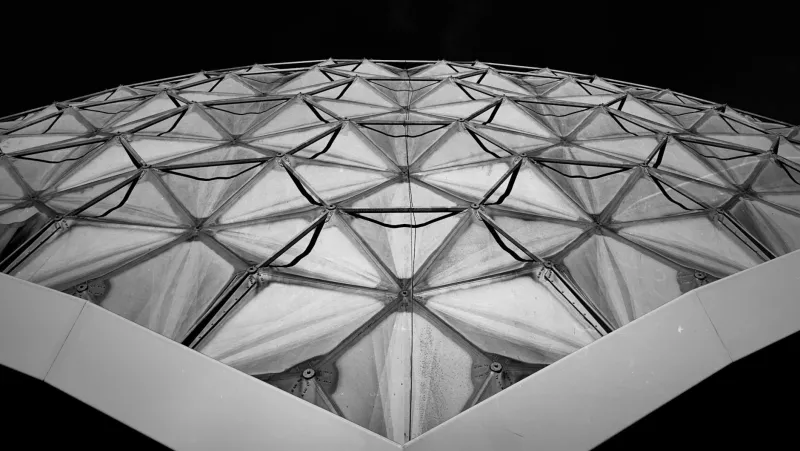
Fuller's most famous invention, the geodesic dome, emerged from his refusal to accept architectural convention. While other architects built with straight lines and right angles, Fuller saw nature's preference for curves and triangles. His domes could enclose more space with less material than any structure in history.
The breakthrough came from Fuller's outsider status. He wasn't trained as an architect, so he didn't know what was "impossible." He approached building design like a mathematician and engineer, asking fundamental questions that trained architects had stopped asking: Why do buildings have to be heavy? Why do they have to fight against nature instead of working with it?
When Fuller first presented his geodesic dome concept, established architects dismissed it as the fantasy of an amateur. But the U.S. military saw its potential. During World War II and the Cold War, Fuller's domes housed radar stations in the Arctic, proving that his "impossible" structures could withstand conditions that would destroy conventional buildings.
The Prophet of Spaceship Earth
Fuller's influence extended far beyond architecture. He was among the first to see Earth as a closed system with limited resources—a concept he called "Spaceship Earth." This wasn't just poetic language; it was a fundamental shift in how humans thought about their relationship with the planet.
His ideas about "doing more with less" anticipated today's sustainability movement by decades. While others focused on growth and consumption, Fuller obsessed over efficiency and conservation. He calculated that humanity could thrive using a fraction of the resources it was consuming—if only we were smart enough to design better systems.
This thinking led to innovations beyond the dome: Fuller designed cars that got extraordinary gas mileage, houses that could be mass-produced and shipped anywhere, and city plans that worked with natural systems instead of against them.
The Failure That Became a Philosophy
Fuller's early failures weren't obstacles to overcome—they were essential preparation for his later success. His inability to follow conventional paths forced him to create new ones. His financial struggles taught him to maximize impact while minimizing resources. His academic disasters freed him from the limitations of traditional thinking.
"I am not a genius," Fuller often said. "I am just a thoroughly educated average person." But his education didn't come from classrooms—it came from a willingness to fail, experiment, and try again.
The Legacy of Wrong Turns
Today, Fuller's influence appears everywhere: in sustainable architecture, systems thinking, and the environmental movement. His geodesic dome graces science museums and emergency shelters alike. His philosophy of "comprehensive anticipatory design science" influences everyone from urban planners to tech entrepreneurs.
But perhaps Fuller's greatest contribution wasn't any single invention—it was proving that society's failures can become its greatest innovators. At a time when education and expertise are increasingly specialized, Fuller's story reminds us that sometimes the most important insights come from people who refuse to stay in their lane.
The Harvard dropout who seemed destined for nothing became the man who helped humanity imagine a better future. In Fuller's universe, there were no wrong paths—only experiments waiting to reveal their results.